
Few people realize it, but cedar shingles have unique properties that require the entire roof design to be carefully tailored to them. This applies to both the right building materials and proper maintenance. One of the factors that must be taken into account when constructing a roof is the type of flashings, as choosing the wrong ones can have serious and costly consequences.
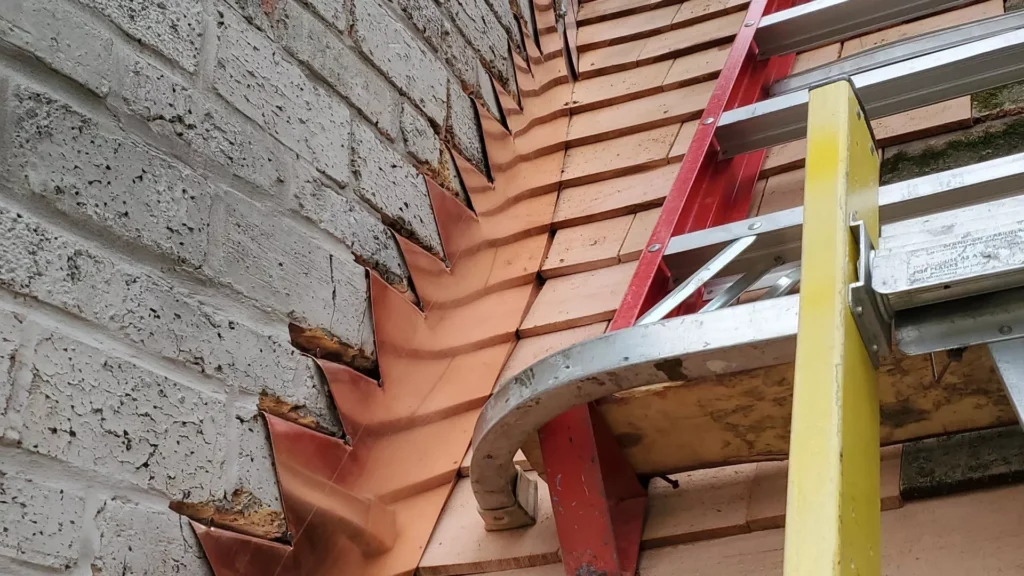
Table of Contents
What Is Roof Flashing?
Flashings are metal components installed on roofs in areas where they are most vulnerable to leaks, such as:
- where the roof meets another surface;
- where the roof changes direction;
- areas with gaps or openings;
- areas where water tends to accumulate.
In such areas, the roofing material alone would not be sufficient, as it cannot create a continuous, watertight surface. The protective layer is interrupted there, which means that additional protection must be installed in the form of flashings. They provide critical areas with a fully watertight surface that directs water away from the roof.
There are several types of flashings depending on the area to be protected. On a cedar roof, each type must be properly selected and correctly installed.
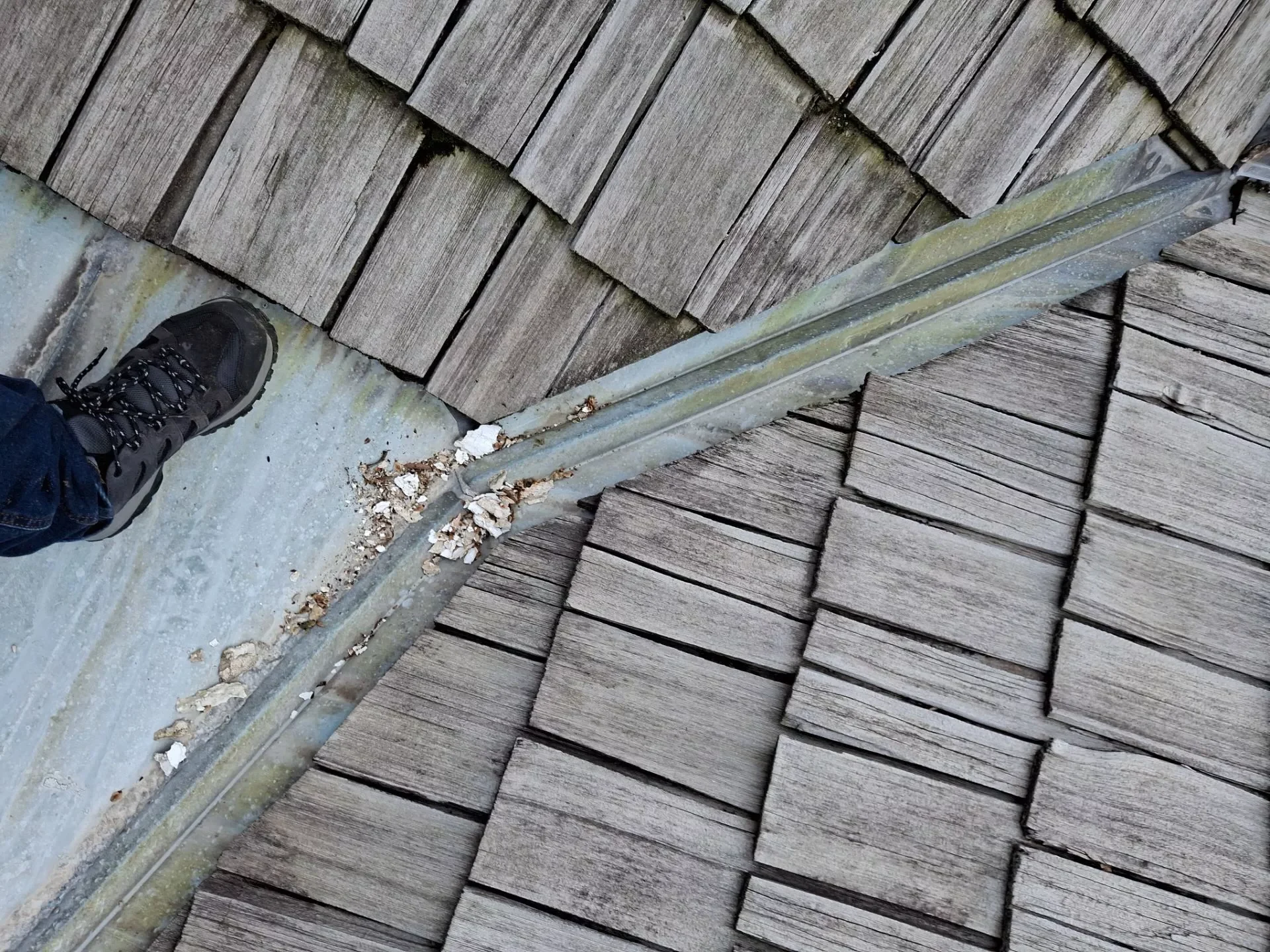
Valley flashing
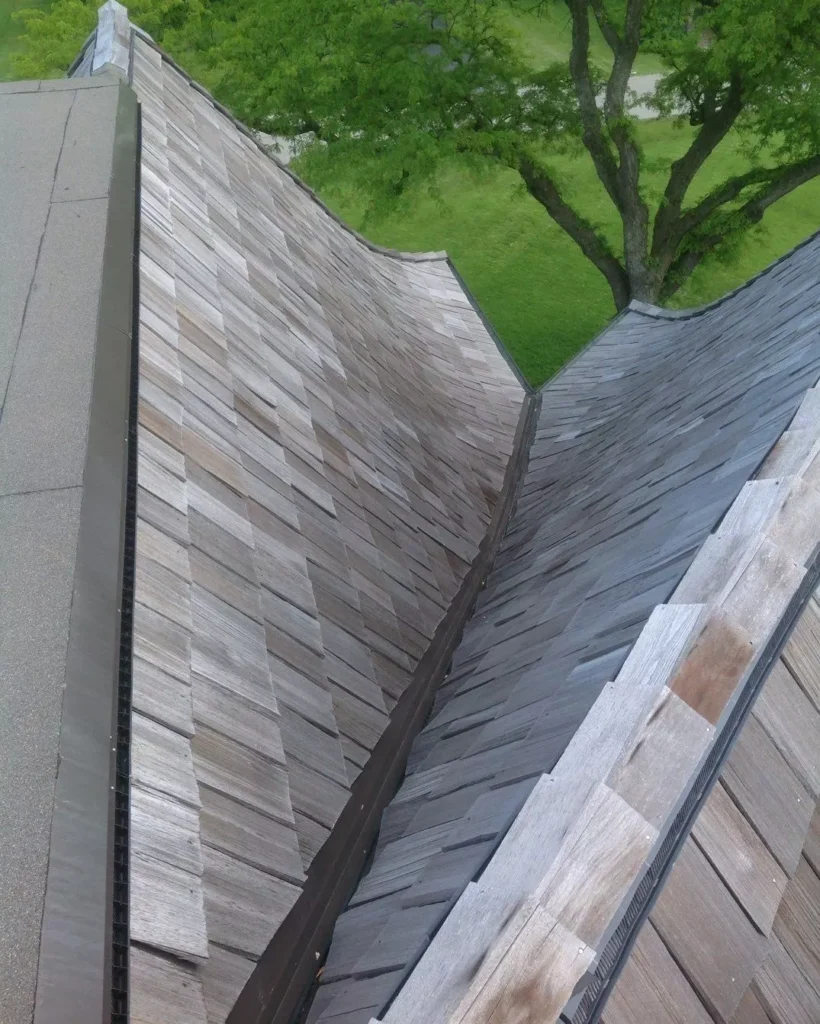
Valley flashing is the most visible type of flashing on a roof and also the one most exposed to water. It is installed where two roof slopes meet, creating an ideal path for water runoff.
Chimney flashing
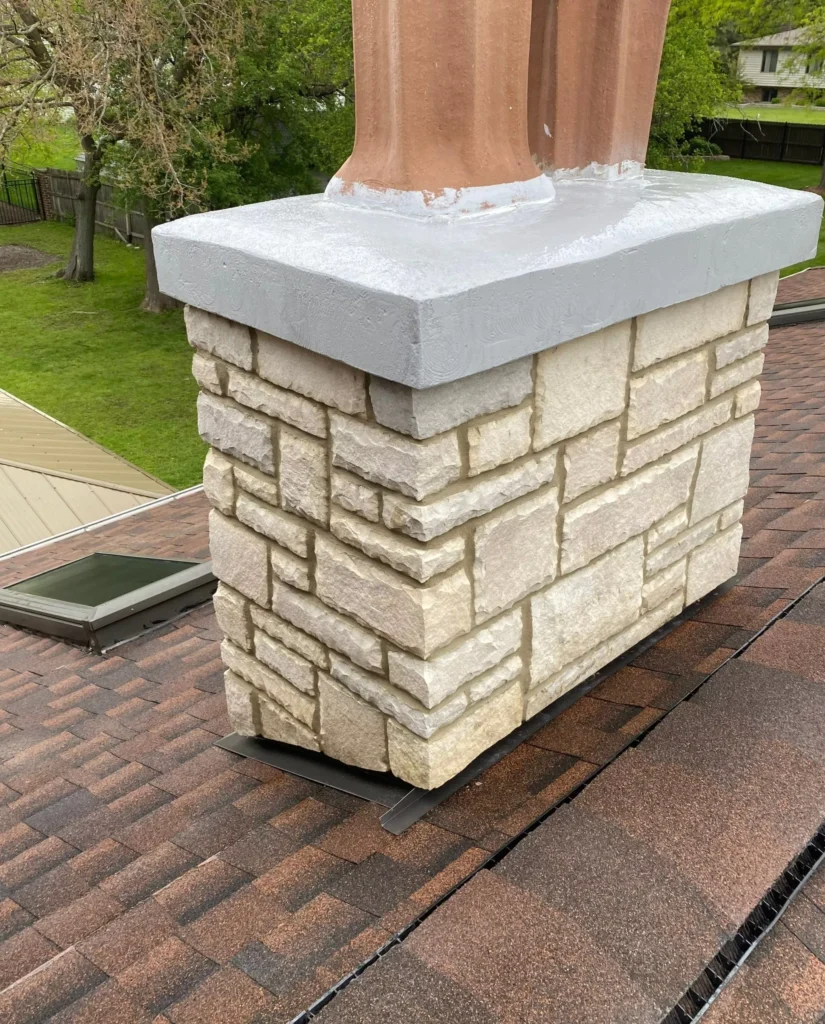
Chimney flashings are installed around chimneys. Although this area may seem inconspicuous, it actually cuts right through the roof’s protective layer and traps water and snow. As a result, moisture tends to accumulate there, requiring an additional protective barrier. Errors in chimney flashing installation are one of the most common causes of roof leaks.
Step flashing
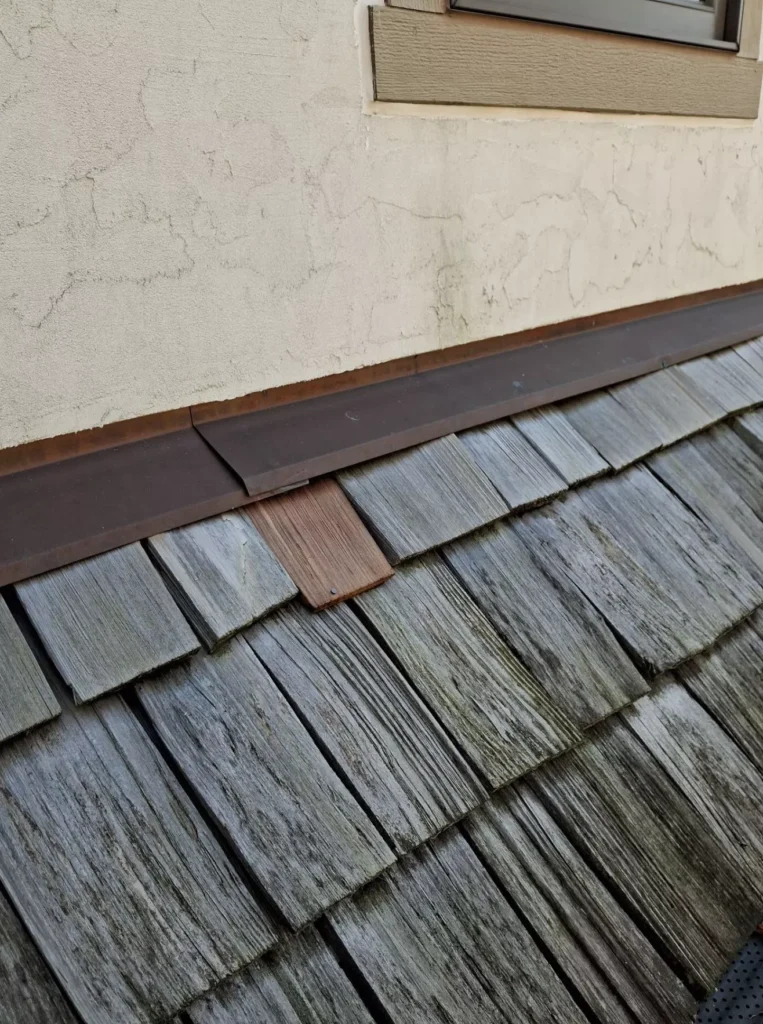
Step flashing is installed where the roof meets a vertical wall. It consists of small pieces of metal layered so that each one overlaps the next and aligns with the rows of shingles.
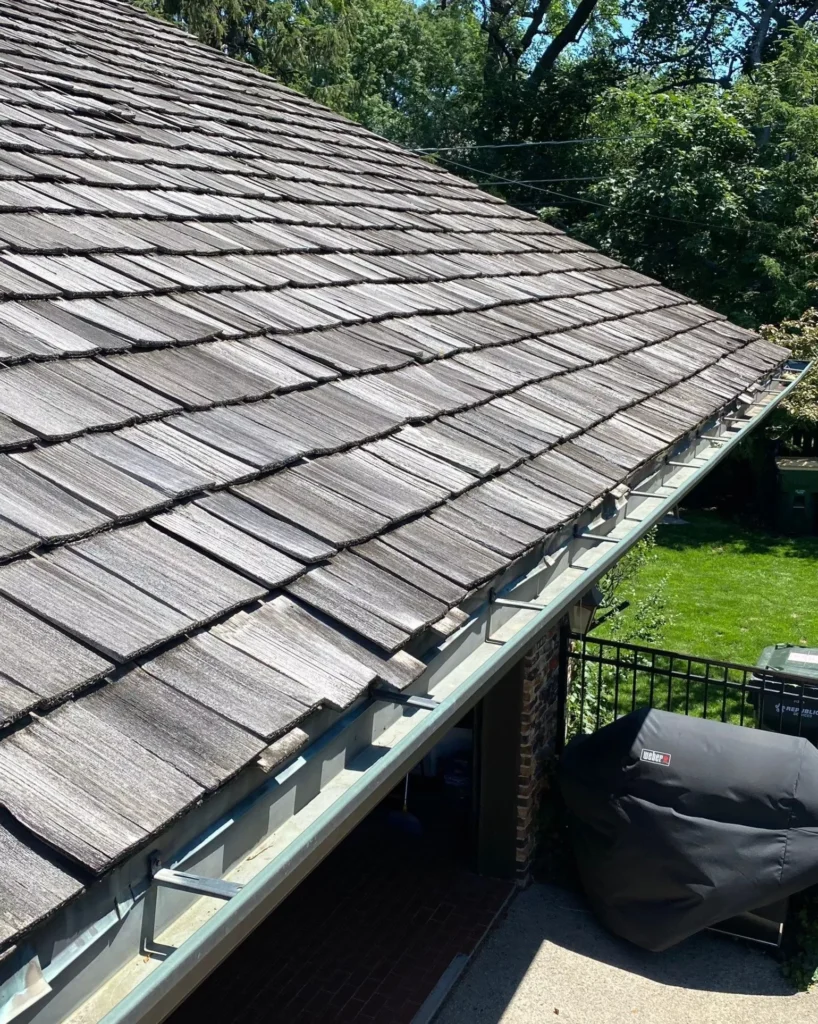
Drip edge flashing
The least visible of all flashings, but just as important, is the drip edge flashing. It is a metal edge installed along the eaves and rake edges that directs runoff into the gutter, preventing it from pooling on the roof.
Ridge flashing
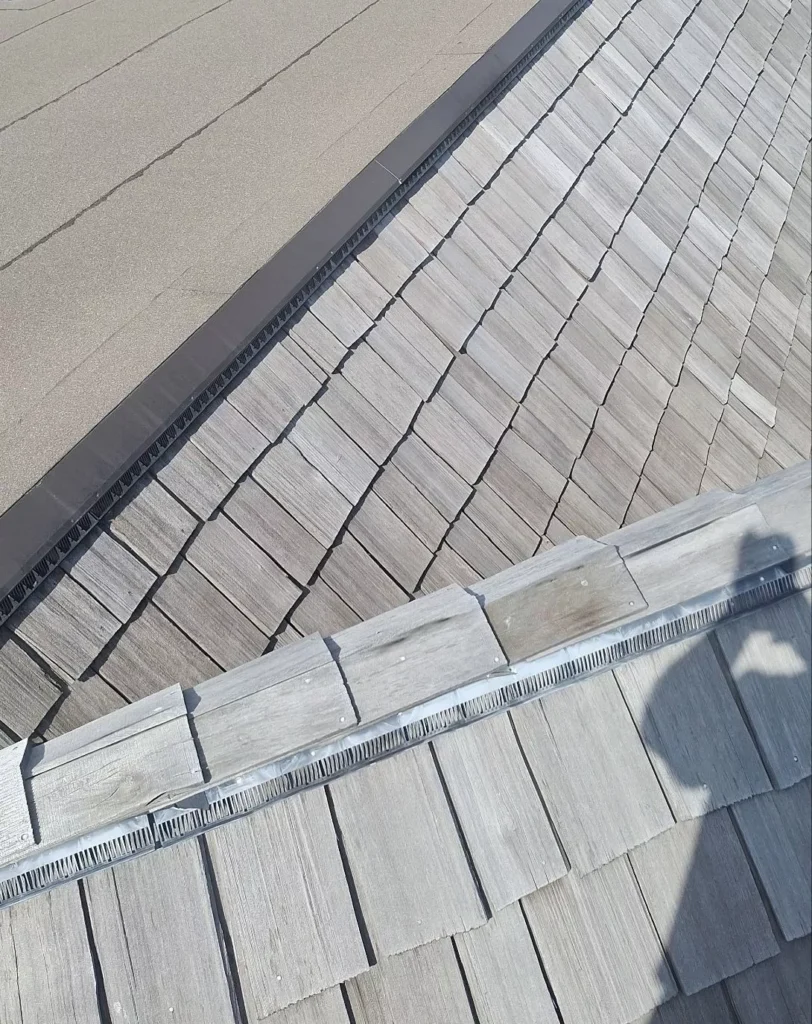
In Illinois, you may also occasionally come across ridge flashing, which protects the ventilation gap.
What metals are used for flashings?
The owner of a house with a cedar roof in Illinois has several types of flashing to choose from, but copper flashing is usually the most recommended. Why is that?
Generally speaking, there are four options available: copper, stainless steel, galvanized steel, and aluminum, and each has its own unique characteristics.
Copper is considered the “premium” option, but this label is well-founded. This material is extremely durable (lasting up to 100 years without replacement) and corrosion-resistant, and it looks very attractive on most wooden roofs. An interesting feature of copper is that, when exposed to the elements, it gradually develops a green patina over time. Whether this is an advantage or a disadvantage largely depends on personal preference. Some homeowners prefer the original brown-gold appearance of new copper, while others appreciate the distinctive aged look of the patina. In addition to changing the appearance, the patina also serves as a protective layer that increases the material’s durability and corrosion resistance. The main drawback of copper flashings is, of course, the price—of all the options, this is the most expensive. Despite this, it is the most commonly chosen option, mainly due to its durability.
Stainless steel is a good alternative to copper. Many owners of cedar-shingle roofs choose it because it offers good corrosion resistance and durability, and it is less expensive than copper. However, stainless steel flashings are less visually appealing and more difficult to work with, which can increase labor costs.
The other two options are not recommended at all for roofs covered with cedar shakes. Galvanized steel will do the job but only in the short term—it will quickly begin to corrode when exposed to moisture and cedar tannins. The situation is even worse with aluminum, which chemically reacts with the wood, accelerating its corrosion. So if you’re considering what type of flashing to use on your wooden roof, you should rule out materials like galvanized steel and aluminum right from the start.
Why Flashing Matters in Illinois Weather
As you may have noticed, the main issue with the materials used to make flashings is corrosion. In Illinois, where winters bring heavy snowfall, and high humidity and summer rains prevent surfaces from drying out, flashing should be as rust-resistant as possible. As I mentioned earlier, copper is the most corrosion-resistant material, followed closely by stainless steel. Galvanized steel and aluminum perform very poorly.
Additionally, Illinois frequently experiences freeze-thaw cycles, which stretch and weaken joints, creating micro-cracks through which water can seep inside. In this regard, copper and stainless steel again fare better—both materials perform well, though stainless steel is slightly stiffer, which puts more stress on the joints themselves. Freeze-thaw cycles have a devastating effect on other materials, as they greatly accelerate corrosion, and in the case of aluminum, they promote material deformation.
Why Cedar Roofs Require Special Attention
When choosing flashings for your wooden roof, keep in mind that cedar shingles are a very challenging material. They have several properties that make selecting the right type of flashing and ensuring proper installation extremely important.
First and foremost, it is important to understand that wood is a natural material that expands as it absorbs moisture and contracts as it releases it. Other materials, such as composite or asphalt shingles, are artificially designed not to absorb water at all and to remain completely stable in volume. Additionally, cedar shingles have an uneven surface that requires greater care during installation and contain natural oils, tannins, and organic acids that react with certain metals. As a result, while the importance of flashing quality may be debatable for asphalt shingles, wooden shingles definitely require careful selection.
When it rains, cedar shingles absorb water, causing them to expand. Over the next few dry days, the moisture is released, causing the shingles to gradually return to their original size. Although this behavior is natural for the material itself, the rigid components attached to it cannot adapt to it. This constant movement of the material quickly reveals installation errors and requires high-quality materials. The installation of flashings must therefore be carried out very carefully, and due to the high exposure to water, materials with low corrosion resistance are simply not an option.
Benefits of Copper Flashing on Cedar Roofs
The greatest advantage of copper is its exceptional durability. Unlike steel or aluminum, it practically never rusts. It oxidizes very slowly, and over time forms an additional protective layer in the form of a patina, which further protects the metal. As a result, one could even say that the older the copper, the more durable it becomes. Copper flashings can therefore last from 50 to even 100 years, outlasting the cedar shingles themselves—when replacing the roofing, they may not even need to be replaced.
Copper is also an ideal choice for a cedar roof due to its compatibility with wood. Chemical compounds present in shingles can sometimes degrade metal. Copper is completely resistant to them and can remain in contact with them for years without any issues. Another advantage of this material is its antimicrobial properties. Copper naturally inhibits the growth of microorganisms such as moss, algae, and fungi. This is particularly important for wooden roofs due to their tendency to retain moisture.
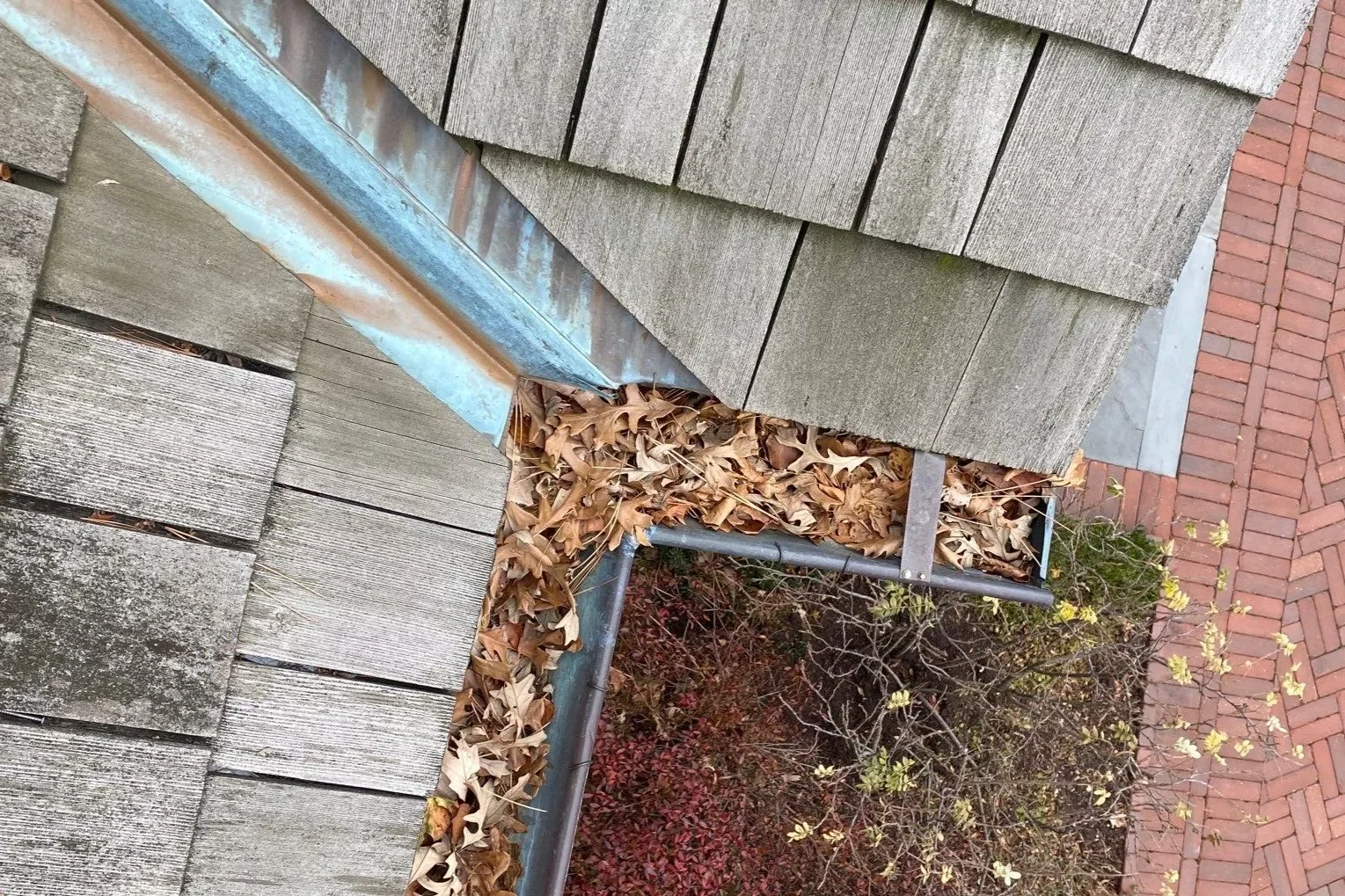
Among the various materials used to make flashings, copper offers the best balance of flexibility and resistance to damage and bending—for example, stainless steel is quite durable but very rigid and difficult to work with, while aluminum is highly flexible but, as a result, prone to bending. Copper adapts perfectly to the irregular shapes of cedar shingles, and its flexibility allows it to remain watertight after many cycles of absorbing and releasing water. Additionally, the ease of working with copper allows the contractor to execute details more precisely, such as around chimneys or in valleys.
The list of copper’s advantages is, of course, rounded out by the material’s aesthetics, which give the roof a “premium” look. During both the early (bronze-gold) and later (green) stages of its lifespan, copper looks very luxurious and blends well with wooden roofing. Interestingly, using it on a roof often increases the property’s value
Copper or stainless steel flashing—which should you choose?
Both materials used to manufacture flashings have their pros and cons, which we described earlier in this article. To summarize them, we’ll compile everything into a single table:
| Feature | Copper | Stainless steel |
| Durability | Very long (50-100 years) | Long (40-70 years) |
| Endurance | Better | Worse |
| Corrosion resistance | Perfect | Perfect |
| Cost | Higher | Lower |
| Appearance | Premium | Modern |
| Colour | Brownish-gold, turning green over time | Silver, gray |
| Ease of processing | Easy | Harder (may increase labor costs) |
Based on this, we can determine who might benefit most from a particular solution: Copper flashings are the ideal choice for owners of premium homes and for those planning to build their “forever home” who want maximum durability. Stainless steel, on the other hand, is a good choice for those who want high durability without the high price tag, as well as for those focused more on functionality than a luxurious appearance.