
Many people who are planning to buy a new roof or replace their existing roofing and value the aesthetic appeal of wood-based roofing face an important decision: whether natural cedar shingles or synthetic shingles that mimic real wood are the better choice. In this article, we’ll take a look at both materials and help you determine which one is better for a roof in Illinois.
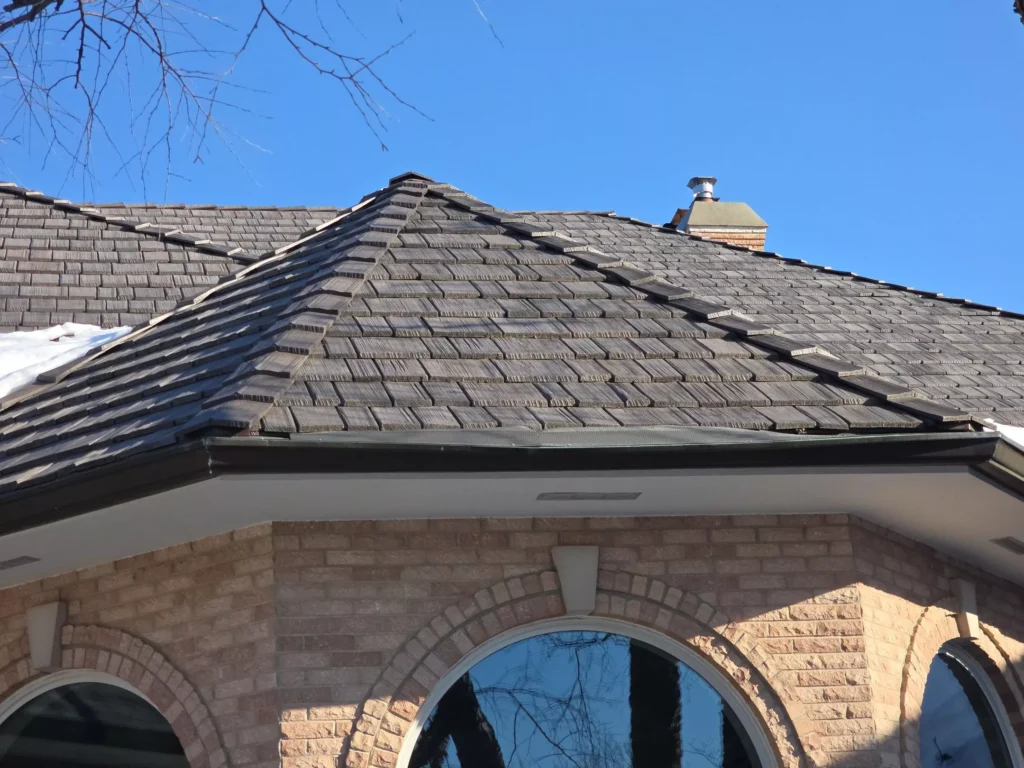
Cedar shakes and composite shakes
Before we compare the two materials, we’ll describe each one individually. This information will provide a solid foundation for clearing up any doubts and making the right decision.
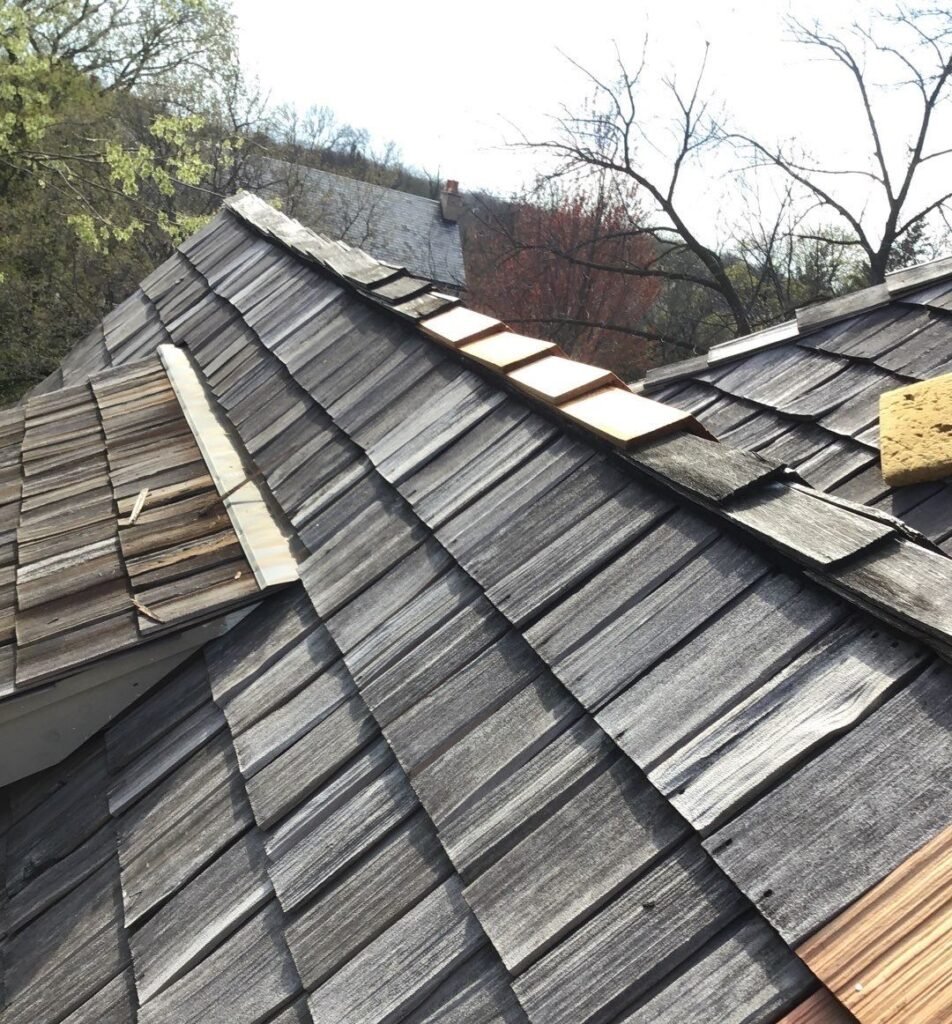
Cedar shingles are a type of roofing material, typically made from Western Red Cedar or Eastern Red Cedar. Both tree species are found in North America, though the Western variety is more commonly used due to its technical properties and availability. A key characteristic of Western Red Cedar is the presence of oils (thujaplicins), which act as a natural biocide. If you plan to buy cedar shingles in Illinois, they will most likely be made from this species.
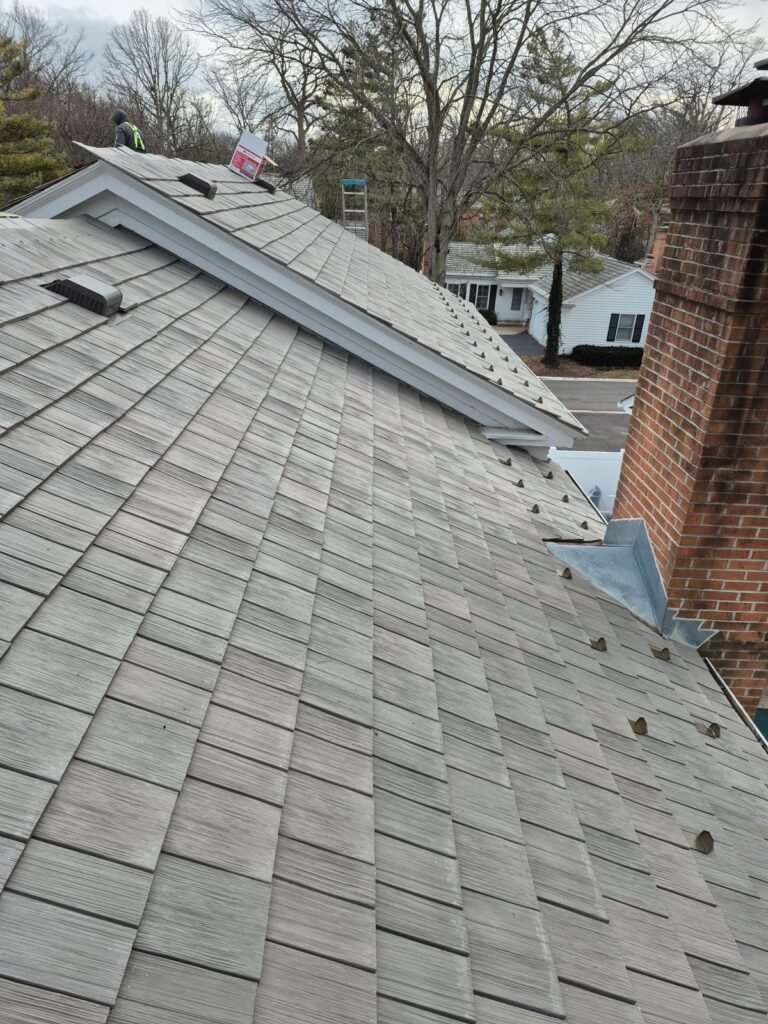
Although the choice of cedar shingles as a roofing material is often driven by aesthetics, wooden shingles have several properties that give them an advantage over some other materials. Wood itself contains the aforementioned natural oils, which protect it from moisture, mold, and fungi. It also offers good thermal insulation—a cedar roof retains heat well and provides effective protection against the cold. Another advantage is their lightness—the material’s low weight does not burden the roof structure, so the roof truss is not subjected to the constant weight of the roofing material.
Cedar shingles typically last about 30 years. Maintenance plays a major role here, and it is absolutely essential for wooden roofing. Cedar shingles require regular treatment, and when necessary, they also need to be cleaned of moss and mold—because despite their natural protection in the form of oils, the Illinois climate takes its toll, and after some time, the roof can succumb to microorganisms.
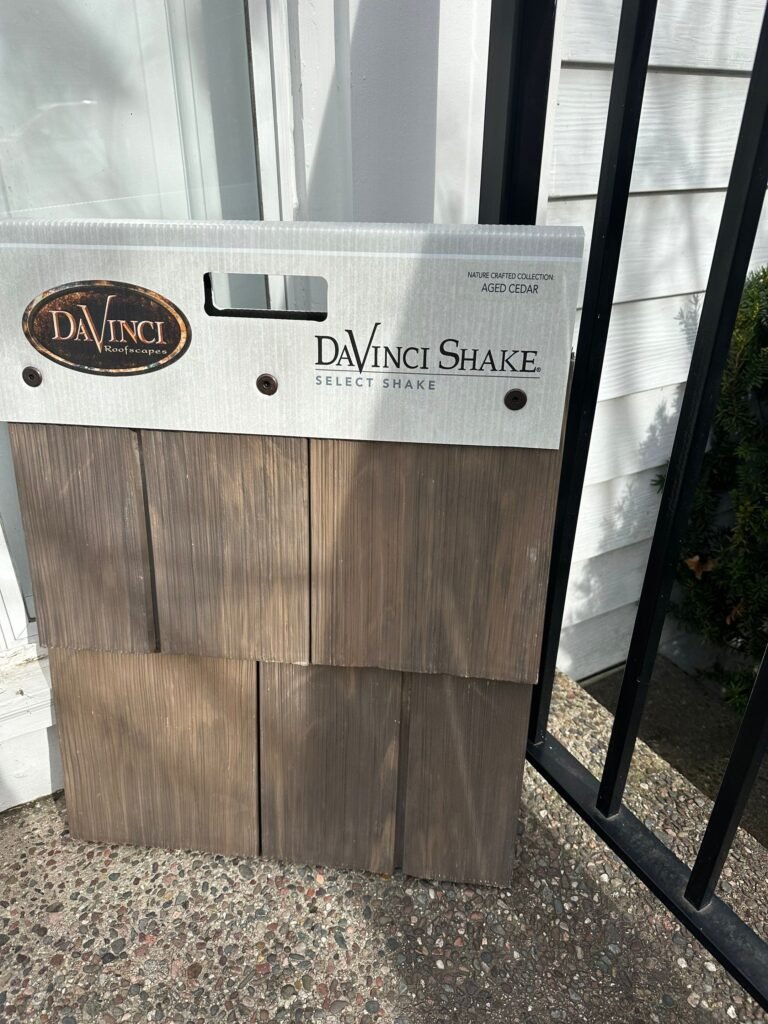
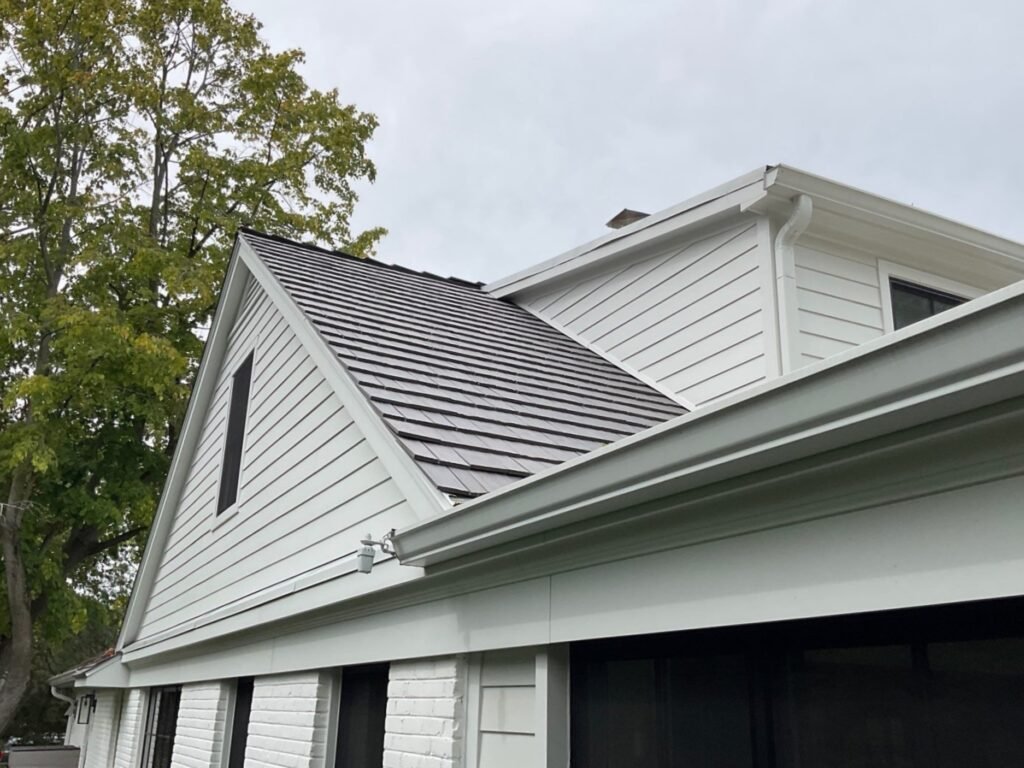
Composite shakes, on the other hand, are a type of roofing material made from synthetic materials that mimic wood. They are typically made from a mixture of plastics and fiberglass, often with the addition of polymer resins, which provide extra protection against moisture and UV radiation. Exceptions include certain premium products, such as Brava Roof Tile or DaVinci Roofscapes, which are manufactured using molds cast from real wood, resulting in a more realistic texture than other composites. While the properties of wooden shingles stem from their natural characteristics, in the case of synthetic shingles, their appearance and resistance to various conditions are ensured by a carefully selected blend of plastics.
Composite shakes can last on a roof slightly longer, up to 40–50 years. In terms of environmental resistance and lifespan, synthetic shakes are very strong competitors to cedar shakes. Below, we will compare them in every respect and identify the pros and cons of both materials.
Appearance
The appearance of roofing is a highly subjective matter. If you’re considering wood or composite shingles, it’s worth comparing many options and choosing the one that best suits your needs. A major advantage of composite shingles is their vast variety—each model is custom-designed, offering a wide selection of textures and colors. Wooden shingles, on the other hand, offer fewer options, though they also differ from one another in terms of appearance.
Lifespan
As mentioned earlier, cedar shingles are outlasted by synthetic ones in terms of lifespan. While they last between 20 and 30 years, composite shakes can last up to 50 years. Of course, these figures will not be the same in every case—whether a roof actually lasts that long depends on proper maintenance and correct installation.
Weather Resistance
Weather conditions can be broken down into several distinct categories. We will describe each of them below:
- Rain and Moisture – Synthetic shingles are fully waterproof, which means they do not absorb moisture. As a result, they are highly resistant to mold and mildew and maintain excellent dimensional stability across a wide temperature range (-40°F to +140°F for top brands). Cedar shingles fare much worse; although they have fairly good water resistance with regular maintenance, in the Illinois climate it is difficult to protect them from moisture absorption over the long term;
- Frost and Snow – As is well known, extreme temperatures negatively affect every material, but in the case of cedar shingles, the effects become visible somewhat sooner. Frost-induced cracks appear much earlier. Both materials handle snow well, though natural wood is more susceptible to damage from the weight of accumulated snow;
- Winds – Both materials withstand winds quite well. In both cases, problems begin toward the end of the material’s lifespan, when it has already lost some of its properties. At that point, very strong winds may be able to lift the shingles and sometimes cause them to break off;
- Hail and other mechanical damage – Hail falling from the sky or branches breaking off trees during a storm can strike the roof, causing cracks in the roofing materials. Synthetic shingles have a fairly strong structure and handle impacts much better than natural wood shingles, which can crack under strong impacts. At this point, it’s worth clarifying one potentially confusing aspect. With new products, you may see the same positive rating for both—Class 4 (UL 2218). However, an identical result does not mean the same level of resistance, as it is determined based on a single impact test. Although both materials pass the test very well, their resistance will differ over the years.
- UV Radiation – Sunlight affects both materials over time, though this happens much faster with cedar shingles. Without proper maintenance, the material becomes more brittle and susceptible to damage.
As you can see, the material’s durability is significantly better with composite shingles. They are definitely the better choice for people who don’t have time to deal with roof maintenance and would prefer to buy them once and not have to worry about them for many years.
Fire Resistance
As you might easily guess, synthetic shingles have much better fire resistance than those made of natural wood. Composite shakes are inherently highly fire-resistant and do not require additional coatings, which is absolutely necessary for standard cedar shingles. Their rating under the American classification system is A, meaning they have the highest resistance to fire spread and sparks. Cedar shingles fare much worse—they only achieve a B or C rating after being treated with waterproofing agents. So if you’re concerned about fires, composite is definitely the safer choice.
Resistance to Microorganisms
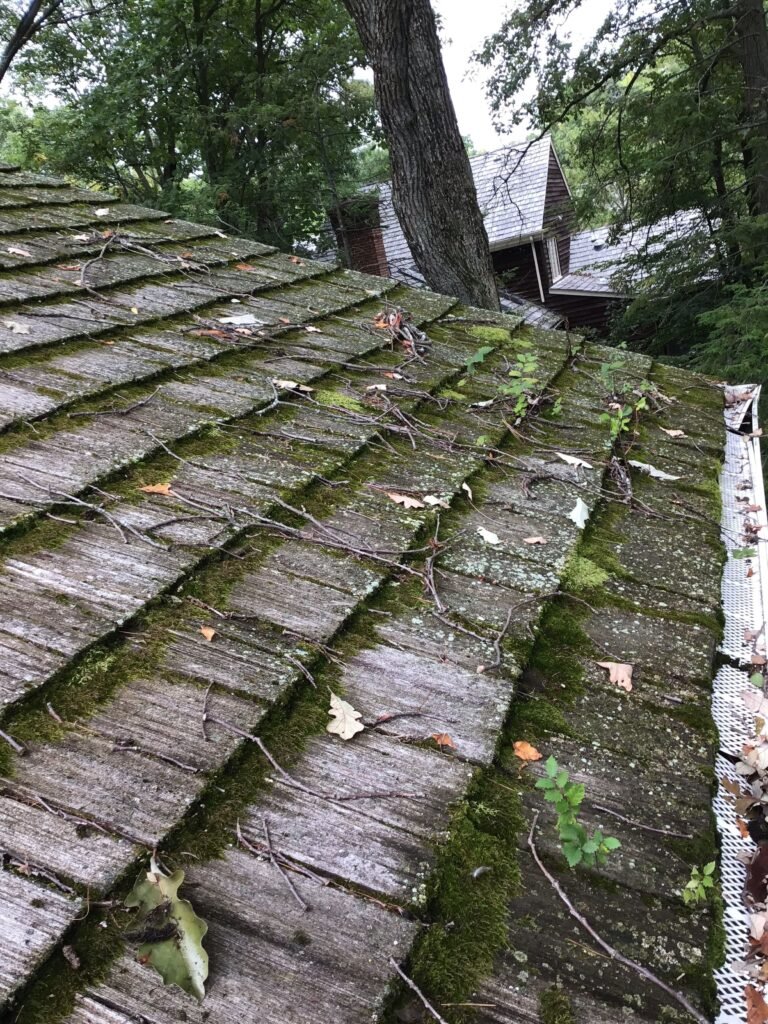
The properties of the two materials mean that their resistance to microorganisms differs significantly. While cedar shakes require constant maintenance and are highly susceptible to the growth of algae, moss, and fungi, the manufacturing process of composite shakes provides maximum protection against these risks. Of course, wood has its own natural oils that protect it, but these typically wear off within the first 5 to 10 years. Maintenance helps here, but in Illinois, the first signs of biological decay often appear after 7 to 12 years. When building a house with a cedar roof in Illinois, it is important to remember that treating the shingles is absolutely essential, as it extends their lifespan in high-humidity areas by 20–30%. The high durability of composite shakes does not mean that microorganisms cannot develop at all—such situations still occur, especially in damp areas sheltered from the wind and/or sun.
Thermal Insulation
The thermal insulation performance of both cedar shingles and composite shingles is very good, but they differ in construction and heat transfer properties. In the case of wood, the roof benefits from its natural thermal conductivity coefficient of approximately 0.11–0.14 W/m·K, which is better than that of other roofing materials, such as asphalt shingles. A major advantage of cedar is its lighter color, which does not absorb as much sunlight, so the attic does not heat up as much as it would with the darker pigments of composite shingles.
In composite shingles, on the other hand, thermal insulation is provided by the material composition, which often includes polymers and mineral fillers, resulting in a thermal conductivity coefficient of 0.19–0.25 W/m·K. Keep in mind, however, that the roofing material is not the key factor in a roof’s thermal insulation—it plays only a secondary role, affecting thermal performance to a limited extent. The primary insulation is usually provided by wool or foam.
The key advantage of composite shingles becomes apparent over time, when micro-cracks begin to form in wooden shingles. At that point, insulation performance deteriorates slightly because heat has more pathways to escape. Composite shingles are fully resistant to this phenomenon.
Maintenance
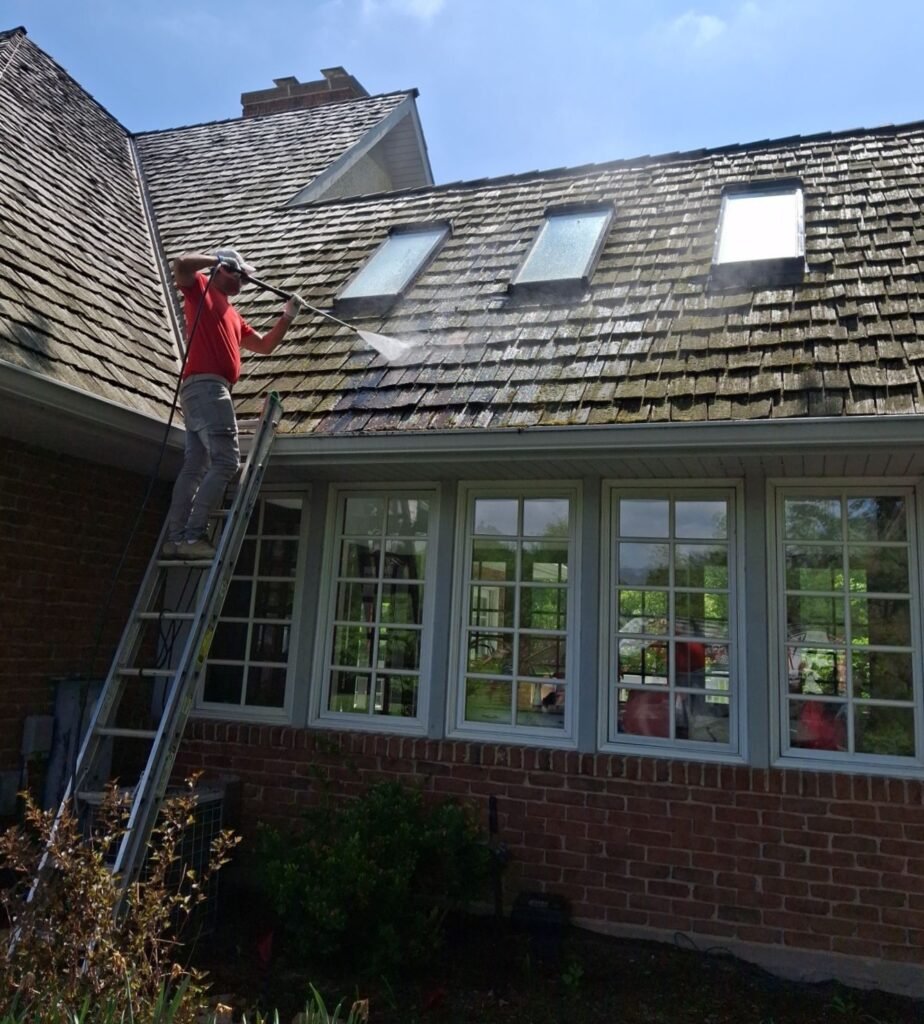
When it comes to maintenance, you need to focus exclusively on cedar shingles, as they are the only ones that require ongoing care. If you want your shingle roof to last 20 years or more, you need to be prepared for regular maintenance sessions that include:
every 3–5 years: washing and applying biocides—the cost of this service is approximately $0.24–$0.45 per square foot, which amounts to $480–$900 for a 2,000-square-foot roof;
every 5–7 years, water-repellent treatment or stain (protection against moisture and UV rays)—this service is slightly more expensive, costing about $0.50–$1.50. For a 2,000-square-foot roof, you’ll need to pay between $1,000 and $3,000.
Without this, it is impossible to keep the roof in good condition for a long time. So remember that while the initial cost of cedar shingles may be lower, in the long run you will spend a lot of money on their maintenance. If you want a roof that you’ll practically never have to deal with (except for washing it once in a while), composite shakes are likely the better choice.
Costs
When it comes to the installation costs of wood and composite roofs in the Chicago area, they are very similar, except that cedar shingles are more expensive to install but cheaper to purchase, while composite shingles are more expensive to purchase but cheaper to install—ultimately, for example, a cedar shake roof will cost you about the same as a roof with Brava or DaVinci shingles. The price typically ranges between $13 and $19 per square foot, though the lower end is rare, occurring only with simple roofs and cheaper materials. If you’re looking for better quality or premium shingles, you should expect to spend around $17 to $19 per square foot; for example, for a 2,000-square-foot roof, the price would range from $34,000 to $38,000.
Environmental Sustainability
When it comes to environmental sustainability, there is no clear-cut winner. The situation is quite complex, as both materials differ in terms of biodegradability and their overall environmental impact over their life cycle (LCA – Life Cycle Assessment).
Cedar shingles definitely win in the first category—wood is fully biodegradable and requires much less energy to produce than synthetics. However, when we look at its LCA, it ceases to be an “ideal” material. This is due to the short lifespan of the shingles, which leads to more frequent replacements, and the chemicals used for maintenance. Waste generated from both maintenance services and installation and removal increases the LCA of wood.
With composite shingles, the situation is the opposite. This material is entirely synthetic, making it much less biodegradable. However, its lifespan is longer, and maintenance does not require chemicals that are harmful to the environment.
So if you’re deciding between these two materials, environmental friendliness alone doesn’t provide a clear-cut answer. Both options have their pros and cons—wood is natural and renewable, while composite stands out for its significantly greater durability and the fact that it doesn’t require chemical treatments for maintenance. In practice, it is precisely this longevity and lower maintenance requirements that often make composite shakes the more eco-friendly choice in the long run.
Warranty
The warranties for composite shakes and cedar shakes differ very subtly. In both cases, they are granted for many years—often 25–50 years for cedar roofs (G&R Cedar and S&W Forest Products offer 40–50 years) and even a lifetime warranty for composite shakes (Enviroshake offers a 50-year warranty, and DaVinci Roofscapes offers a lifetime warranty). The warranty is often tied to the roof and is fully transferable to the next owner.
It is important to note that this protection covers only manufacturing defects, not material aging or defects resulting from improper installation. In practice, it reflects the quality of the material, but not necessarily its durability. It therefore provides good protection against risks associated with material defects that originated at the factory, but should not be relied upon after many years of roof use.
Summary
Cedar shakes and composite shakes are two completely different roofing materials, each with its own characteristics. When it comes to durability, composite shingles outperform cedar in almost every aspect, mainly due to their fully synthetic construction. Cedar shakes are considered a premium choice—although they have a shorter lifespan, their prestigious appearance helps maintain their high value.