
You may already know that every roof needs ventilation. It’s also probably obvious for you that venting cedar shakes may work and look a little different than venting asphalt shingles or sheet metal roofing. But have you ever wondered what happens if your roof is not vented at all? Or what happens, if the air flow is stronger than it should be? Our experts will do their best to explain to you everything and teach you the basics of cedar roof ventilation.
Table of Contents
Why Are Cedar Roofs Ventilated?
Actually there are several reasons why every cedar roof should be ventilated:
The Better Ventilation is, the Longer Your Cedar Shingle Roof Lasts
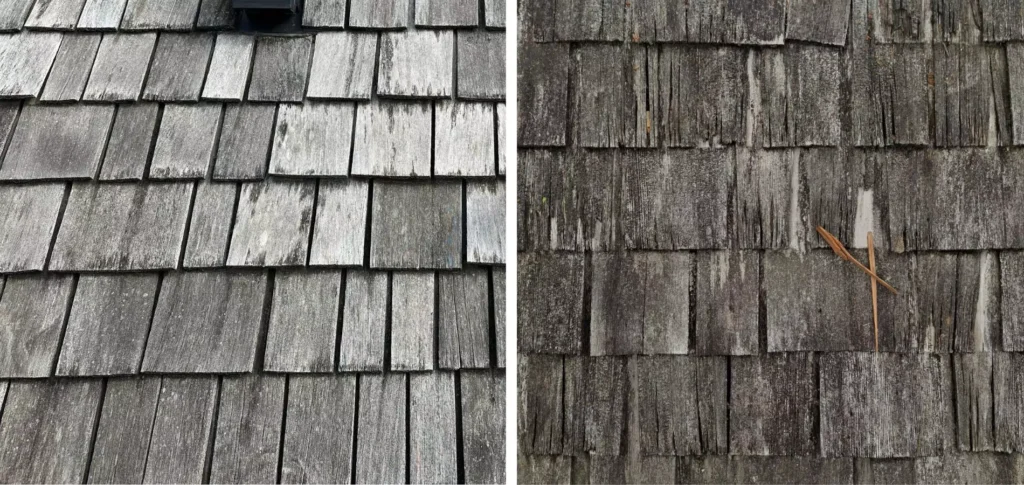
No matter what people say, every single cedar roof is vulnerable to humidity and temperature. The warmer and more humid shakes are, the faster mold grows and even regular cedar roof treatment will not solve this problem completely. According to our research and more than 20 years of experience, properly functioning roof ventilation minimizes the risk of roof truss rot development by as much as 70%. It translates to real money, as replacement of rafters and purlins usually costs at least $30,000.
A well ventilated cedar roof is less likely to mold or rot, as temperature and presence of water speed up the growth of fungi and bacteria.
Lack of Roof Ventilation Leads to Icicle and Ice Dam Forming
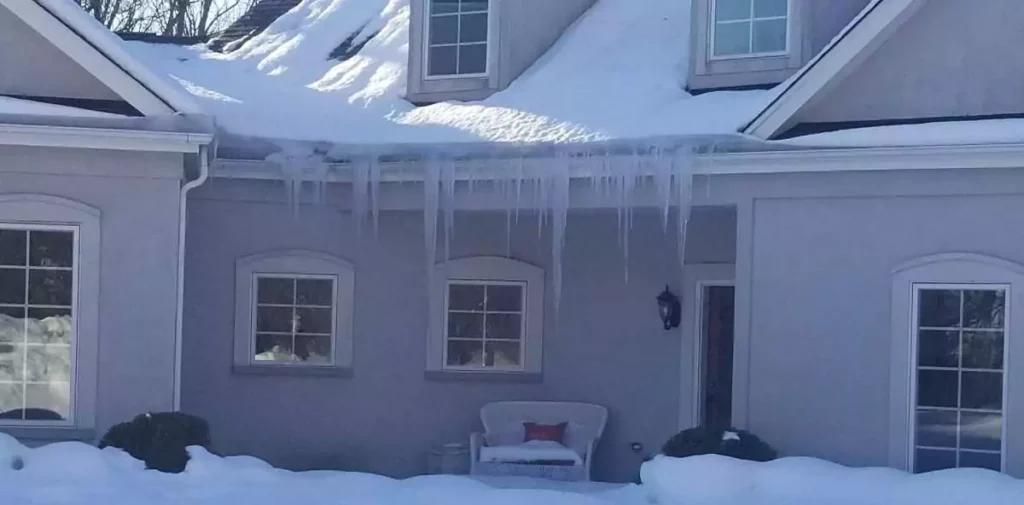
In the climate of the northern part of the United States and Canada, during the winters ice dams form. Icicles forming on gutters and edges of the roof may look pleasing, but at the same time, they are a serious threat for you, your family, and the house itself. Ice dams, which we are speaking of, form when the snow on the roof melts partially, and the water freezes at colder parts of the roof. Such a phenomenon usually occurs, but the insulation properties are poor, or when there’s insufficient attic ventilation.
As efficient attic ventilation moves warm air outside the building, your shakes won’t get warm enough to melt the snow. Thus, ice dams will not form on the gutters and leaks will not appear.
Without Ventilation, Being in the Attic in Summer Becomes Uncomfortable
Everyone knows that the warmest place in the house during the summer is attic. One of the reasons of such a phenomenon might be a faulty roof ventilation, which doesn’t provide enough cold, fresh air. Poor flow of air lowers your comfort, especially if there’s only a little of thermal insulation, what is typical for older homes in the United States.
Properly Ventilated Attic Helps With Reducing Air Conditioning Costs
No matter how hard you try, hot air in the attic will always affect the temperature in rooms below. Thermal conduction transfers some energy downstairs, and it means that if the roof is hot, other parts of the house will also be. On the other hand, proper ventilation in the attic removes thermal energy also from lower stories of your home. Thus, you will probably save hundreds or even thousands of dollars yearly, simply by installing some exhaust fans.
Efficient Roof Ventilation Helps You to Breathe
As humid and warm air rises and escapes the house through the ridge caps, the humidity inside your house lowers. Generally speaking, it should increase your comfort and make breathing easier. You will also feel less sleepy and concentrate easier. It’s all because of the concentration of carbon dioxide and water vapor indoors.
How Does Roof Ventilation System Work?

Before we start, it’s worth mentioning that each roof is ventilated in a few ways. Every house in the United States should have its attic ventilated, but smart roofing contractors ensure that there’s air flow between shakes and sheathing. These two air circuits are meant to be separate and are equally important in terms of mold prevention.
As Cedarroofcoatings.com mentions, even in the early 1900s, builders were aware of proper ventilation importance. First documents state about condensation problems, which led to mold growth, for sure.
Attic Ventilation in a House With Cedar Roof
Simply put, the main goal of attic ventilation is to remove the hot, humid air and at the same time, to provide fresh, cold air to space under your roof. Roof ventilation may affect the temperature in other parts of your home, but it’s rather a positive side-effect. Just as in case of asphalt roofs, cedar roofs also need to be ventilated. Well-designed ventilation system visibly lowers the temperature of shakes – even up to 15 degrees Fahrenheit.
When designing an attic ventilation, your Riverwoods cedar roofing contractor must ensure that enough warm air is exhausted. To achieve that, mechanical vents are sometimes used. It’s worth noting that you can improve the air movement by fashioning the attic properly. We do definitely recommended using natural ventilation if only it’s possible. If there’s no fan, the risk of failure is significantly lowered.
External Roof Ventilation
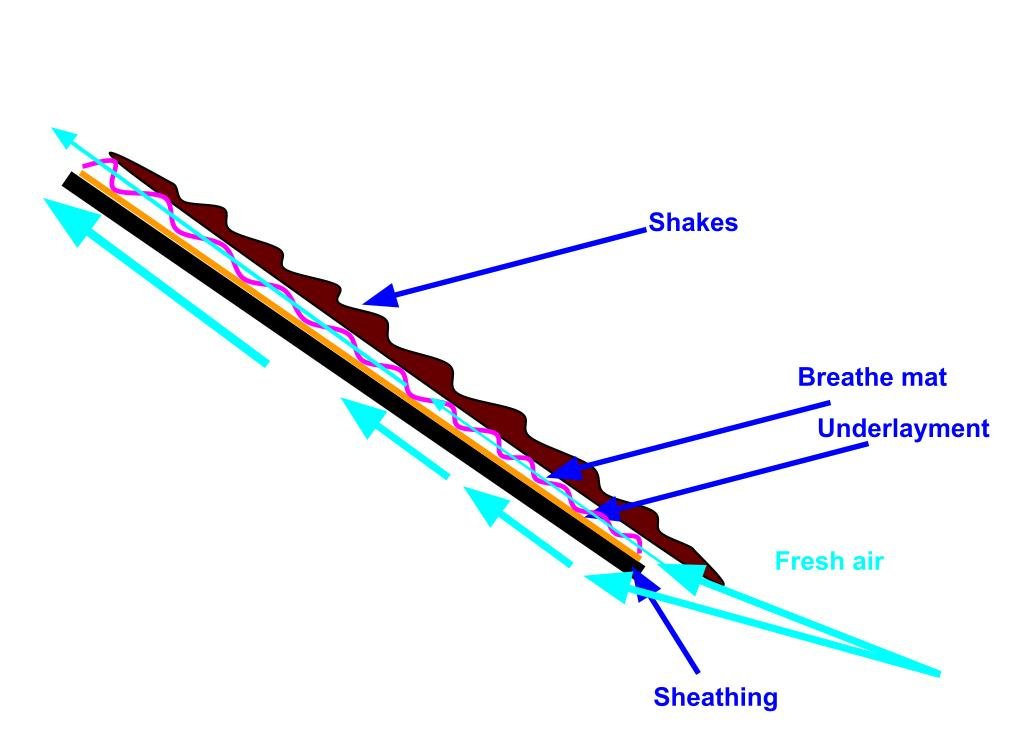
Apart from internal air flow in the attic, there is also another way to remove water vapor from cedar shakes. As you may wonder, there is a space between shakes and sheathing, which is extremely important – in these small chanel under the rooftop, fresh air comes.
The same as in case of attic ventilation, also external air flow affects the lifespan of shakes. Circulation of fresh air is crucial especially when roof rake’s length exceeds 20′ because heat spots on slopes start forming. To balance airflow disturbances, constant movement of air under shakes is necessary.
To improve external airflow, some companies started producing special mats. Their goal is to separate shakes more from sheathing, thus increasing the volume of air transported.
What Cedar Roof’s Attic Ventilation Consists of?
As you can suppose, every roof ventilation system consists of intake and exhaust vents, and their performance should be at the same level. We should add, however, the performance of the whole setup is limited by performance of the weakest part of that – no matter if it’s intake or exhaust.
Exhaust Vents
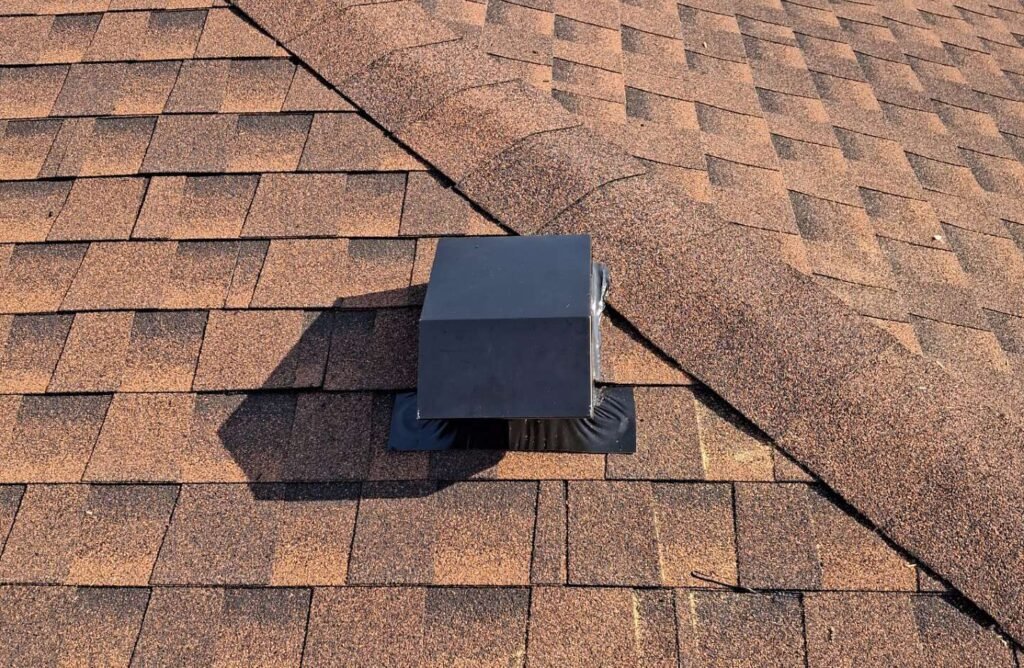
Exhausts are responsible for removing hot and humid air from the attic. As homes with cedar roofs are rather small, and cedar itself is less vulnerable to thermal deterioration, ridge vents are most popular. These are ventilated ridge caps with metal nets at the bottom.
Sometimes, however, natural ventilation is not enough to cool the shake roofs. In such cases, powered box vents are used. You can recognize these fans easily, as they stand out of the roof slope remarkably.
Intake Vents
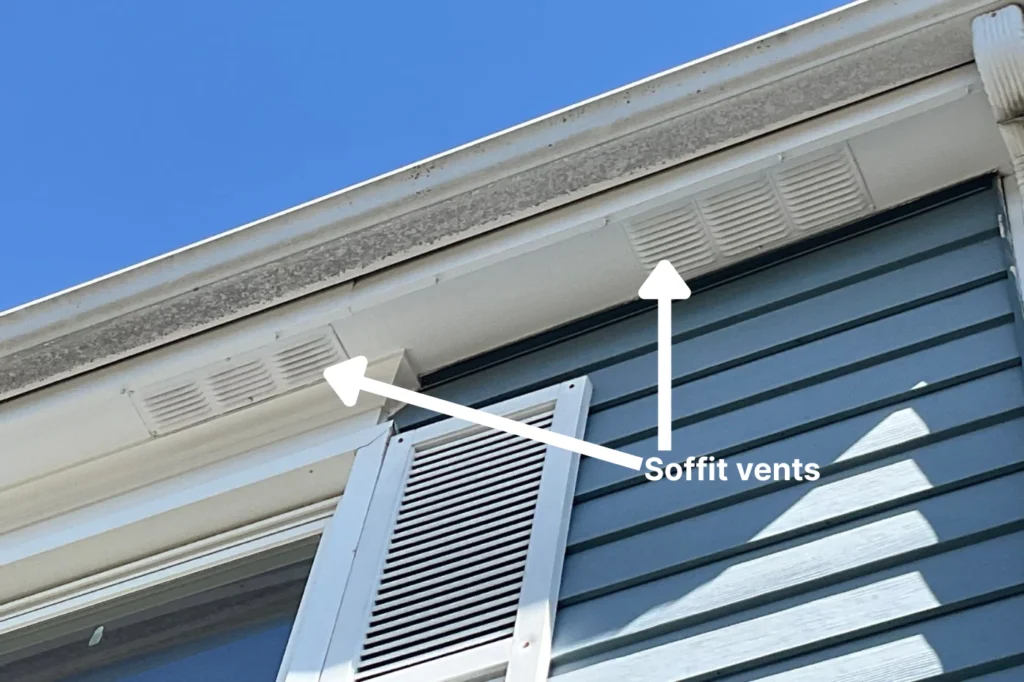
Along with exhaust vents, intake vents are coming too. In case of cedar roofs, the most popular are soffit vents, which should be located evenly, around the roof’s eave. It’s worth noting that probably every intake ventilation device is passive – we have never seen mechanical inlets.
Breather Mat
Although the breather ventilation mat is not technically part of attic ventilation, it’s worth adding a few words about it. First and foremost, in our opinion it’s at least as much important as exhaust or intake vents – properly sized space between house wrap (or underlayment) and shakes reduces the risk of mold and mildew growth that much that in some cases it’s even unnecessary to install attic vents.
How Many Vents Should Be Installed on a Cedar Roof?
While International Building Code (IBC) section 1202.2 requires that vents must be no less than 1/150 of the ventilated area, we recommend 1:100 ratio. In case of many of gable roofs, only 1/300 of roof area is required, but in many cases it’s simply insufficient. In practice, it’s worth installing vents along all of the ridge – such a roof ventilation system works perfectly in vast majority of houses. Heating cost will obviously rise, but it’s better to pay slightly more for heating than to replace a roof every 10 years.
Although we usually don’t use mechanical cedar roof ventilation, sometimes it makes sense too. It happens mainly when there’s a huge heat source under the particular part of the roof – a good example may be a sauna, A/C unit or bathroom. If something similar is present in the attic or at the highest floor of the house, additional mechanical vent is definitely recommended.
Can I Install Roof Ventilation on my Own?
Theoretically speaking, yes. Creating roof ventilation system is fairly simple task, but you have to be aware of complications resulting from complicated design of the attic. Houses with multi-pitched roofs with windows installed, are challenging for even very experienced roofers. It’s because even minor complication of the surface disrupts the flow of air, affecting the ventilation properties.
Maintenance of Cedar Roof Ventilation
Maintenance of roof ventilation system is absolutely crucial – it’s the only way to prevent shakes made of cedar wood from aging. Shakes affected by poor ventilation damage are likely to curl and rot that’s why, if you spot these symptoms during the regular inspection, you should take a look at vents. Especially these on peak of the roof are vulnerable to get clogged with dust, dirt and debris, which, with presence of moisture, create a muddy sludge in vents.
While it’s not popular problem, every homeowner should be aware that moss is also a threat for their cedar roof. Despite it’s beauty, moss blocks the air circulation around the roof. As you may think, after some time, as a result, shakes can rot, curl, or simply deteriorate.
Frequently Asked Questions
Is cedar breather necessary?
In our opinion, yes. Breather mat is a necessary part of cedar roof ventilation, probably more important than exhaust vents. If you want to have your roof system in a good condition for many years to come, breather mat is absolutely necessary.
What is the most effective roof ventilation?
The most efficient will certainly be mechanical and turbine fans. Although, naturally, air will also circulate, forcing this process by means of an electric motor or by wind turning a turbine greatly increases the amount of water vapor removed.