
Roofs covered with wooden shingles are highly susceptible to any kind of moisture. Proper ventilation of such a roof is absolutely essential for its longevity—water that remains trapped under the shingles for long periods promotes the growth of microorganisms and ultimately shortens the roof’s lifespan. One product designed to address this issue is the ventilation mat.
What Is a Ventilation Mat?
A ventilation mat (also known as ventilated underlayment or a ventilating rain screen mat) is a special three-dimensional spacer mat. It is installed on a waterproof membrane, directly beneath the shingles, creating a space between these two roof components for air to circulate and water to drain.
Such a mat typically takes the form of a mesh made of synthetic materials such as nylon, polypropylene, or polyethylene. This makes them highly resistant to moisture and microorganisms. Due to their structure, in which the empty space often accounts for 85%–90% of the total volume, they also have a very low weight. Such a ventilation gap is typically 0.4–0.6 inches.
How Does a Ventilation Mat Extend the Lifespan of a Roof?
To understand how a ventilation mat works on a roof, you first need to understand the problems faced by roofs covered with cedar shingles.
Wooden shingles themselves are a fairly durable roofing material, as they can last up to 30 years when well-maintained. Two factors are key to their wear and tear: conditions and maintenance. In this article, we will focus solely on the former, as a ventilation mat significantly improves them.
By “conditions,” we mean the environment in which the shingles are located. This includes both weather conditions and how they are installed on the roof, contact with moisture from inside the house, and opportunities for drying. When the material is subjected to conditions that result in constant contact with water, this leads to its degradation.
The main problem with wooden shingles is the risk of rot and the growth of microorganisms, such as mold and fungi. This occurs when water remains in the shingles for too long—either because the shingles cannot release it for various reasons or because it accumulates beneath them. Ventilation is therefore crucial here, as its purpose is to help the material dry out.
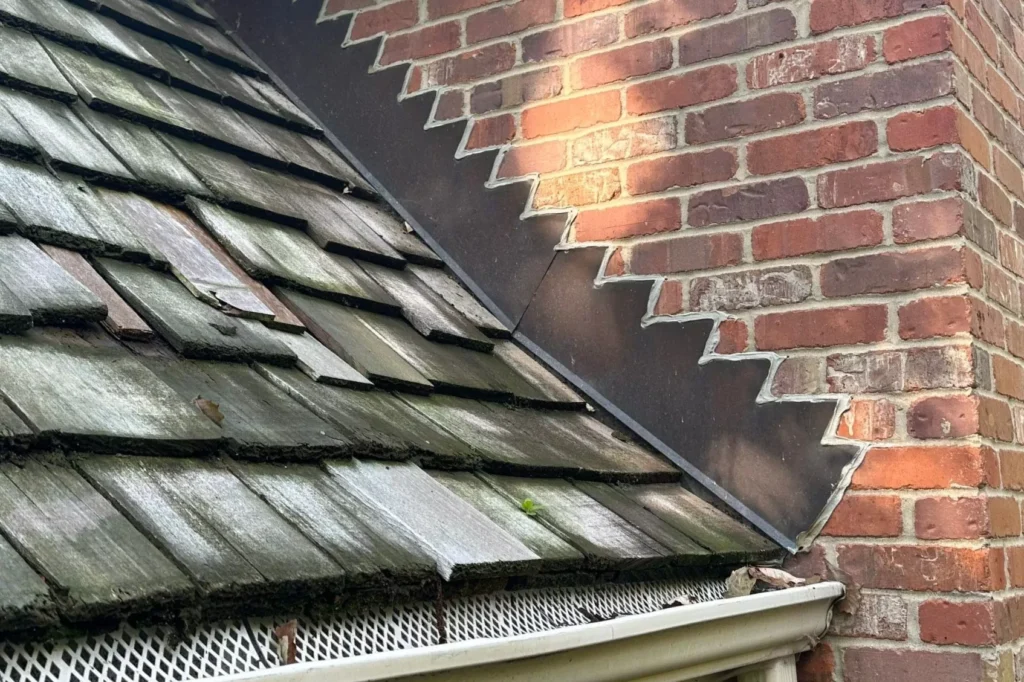
Traditionally, the ventilation gap is located between the underlayment and the shingles. It is through this gap that water that gets under the shingles drains away, and air flows through, gradually carrying away water molecules as the material dries.
In practice, this ventilation is often simply insufficient. And it’s not even a matter of contractor error (though such errors certainly increase the risk)—the space is so small that even with perfectly laid shingles, there can be areas where airflow is weaker.
This is precisely what the ventilation mat is designed to address; it ensures that the gap maintains a specific width across the entire surface. As a result, there will always be space for airflow and water runoff, and the risk of rot and microbial growth will be minimized. Since these are among the main threats to cedar shingles, the presence of such a mat often significantly extends the roof’s lifespan, even up to 35 years.
Does It Work?
A ventilation mat is not some magical invention from TV that’s supposed to solve all problems but ultimately doesn’t work. It is a premium-segment product that certainly fulfills its purpose, but to avoid disappointment, you need to be aware of a few important aspects.
Keep in mind that a ventilation mat cannot replace an entire ventilation system. If the system is designed or installed incorrectly (e.g., the airflow created by the eaves and ridge is ineffective, or the side details are poorly executed so that water has nowhere to drain), the presence of an additional mat will not fix the problem. A ventilation mat only improves the performance of a properly installed ventilation system; it does not create it.
Is a Ventilation Mat Necessary for a Cedar Roof in Illinois?
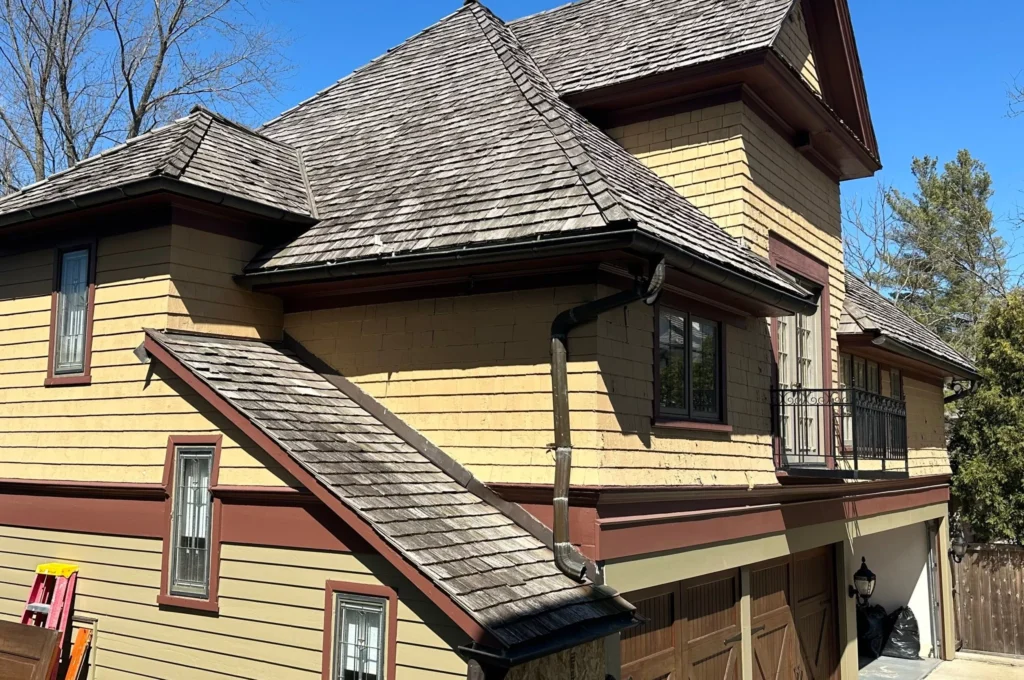
Unlike Ice and Water Shield, building codes do not require the installation of a ventilation mat on the roof. However, many professionals strongly recommend it because the climate in Illinois is quite challenging. Cold winters and hot, humid summers mean that wood shingles are constantly exposed to water. For a project like a wood-shingled roof, the cost of installing a ventilation mat is relatively low, and it simply makes the roof more cost-effective.
Is It Worth Investing in a Ventilation Mat?
Ventilation mats are often viewed by professionals as an “inexpensive addition to an expensive roof.” Of course, they aren’t cheap, but compared to the tens of thousands of dollars required for a wood roof, the cost of the mat typically accounts for about 1–5% of the total cost.
For example, the CedAir Mat by Advanced Building Products costs between $140 and $220 per 200 square feet, which works out to about $0.70–$1.10/ft². For a 2,000-ft² roof, the total material cost is approximately $1,400–$2,200. Of course, labor costs are added to this, but installing a ventilation mat is relatively simple, so those costs won’t be very high either.
Meanwhile, a 2,000-square-foot roof alone will cost you $40,000–$60,000, so spending a few thousand more to significantly improve its ventilation and likely extend its lifespan is definitely worth it.
Ventilation Mats Under Other Roofing Materials
Although ventilation mats were originally designed for wooden roofs, there are situations where they are used with other roofing materials. We’ll look at a few of these and discuss whether a ventilation mat makes sense in each case.
Asphalt Shingles
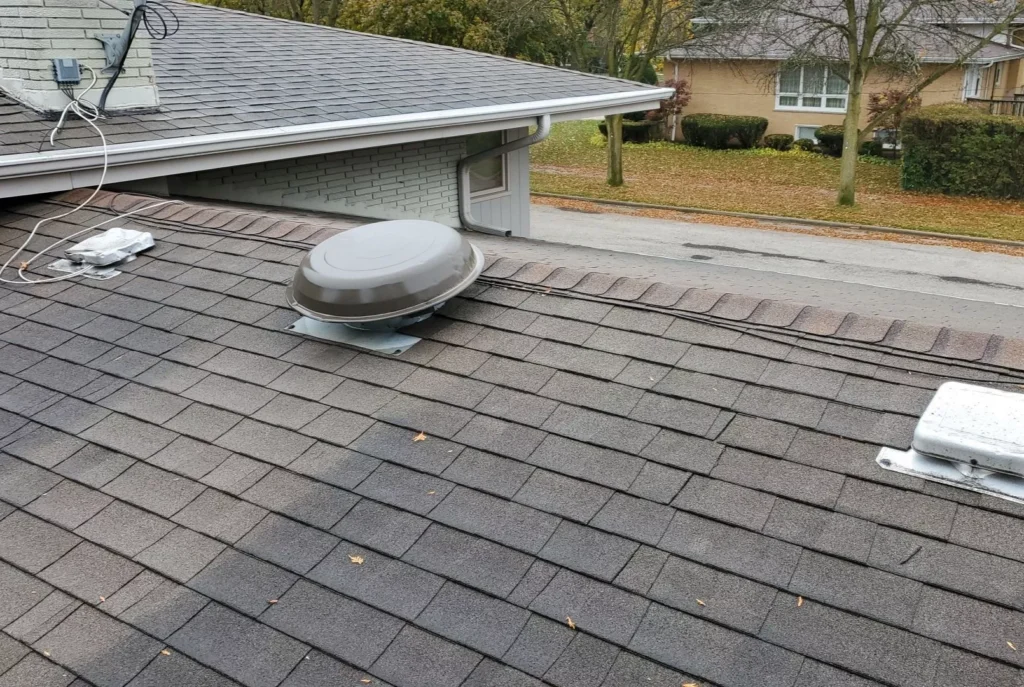
Asphalt shingles are by far the most popular roofing material in the U.S. They are installed directly on the underlayment, leaving no ventilation gap. This is because ventilation is simply unnecessary with asphalt shingles—their primary function is to provide a watertight seal, not to release moisture, so they do not require drying from below. A ventilation mat is therefore not installed, as there is no ventilation on such roofs for it to improve.
In very specific cases, a roofer may suggest a solution involving a ventilation mat under asphalt shingles, e.g., when there are issues with roof overheating or during the renovation of old roofs; however, this is very rare and requires a proper design and, ideally, consultation with a specialist.
Synthetic Tiles
Synthetic tiles, such as DaVinci or Brava, also do not require a ventilation mat. Like asphalt shingles, they are installed directly on the underlayment, and no ventilation gap is left. They also do not require drying, as they do not absorb water like wood does.
The only situations in which a mat may be used are those where the homeowner is dealing with a very hot roof (i.e., one with exceptionally high sun exposure and a dark color). In such cases, the gap is not intended for drying but rather to ensure airflow that cools both the tiles and the layers beneath them. This is still not standard—even in hot climates, it is assumed that the roof will be cooled by structural ventilation. The mat is therefore treated as an additional safeguard that will help if someone is concerned about controlling the roof temperature.
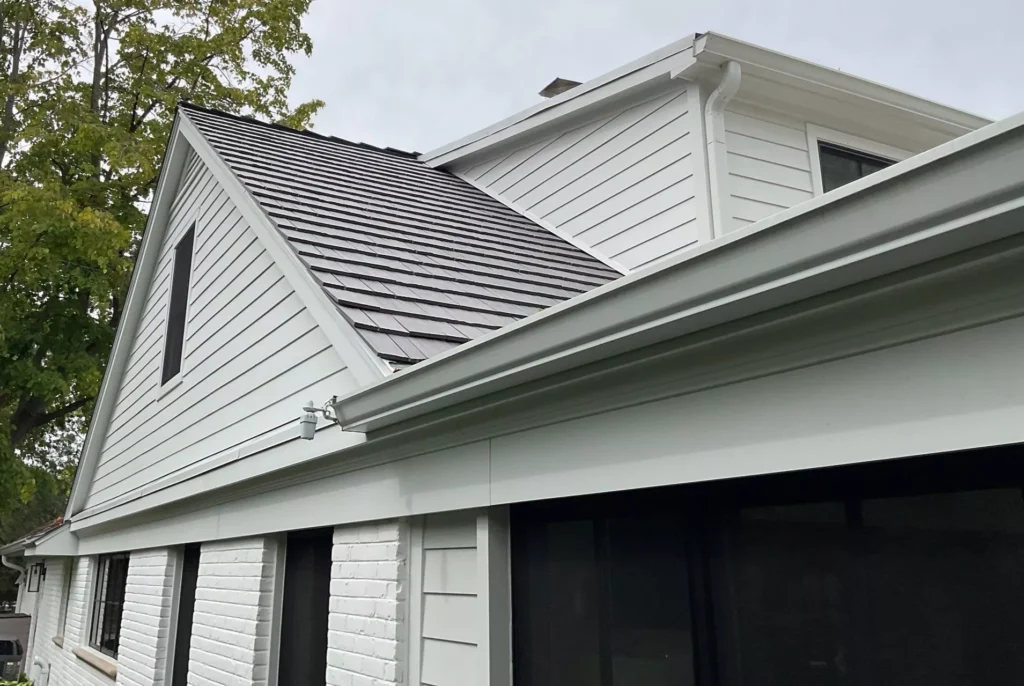
Metal Roofs
Here, the situation is slightly different and depends on the construction. If the metal sheeting is laid over battens, a wide gap is guaranteed and the entire system breathes freely. Ventilation mat, however, can be useful when the metal is installed over a solid sheathing.
In a cold roof system over a solid deck, the metal sheet experiences significant daily temperature fluctuations, and warm air from the house condenses when it comes into contact with the cold roof. A ventilation mat is a solution that can help with this, as it creates a sort of drainage channel that provides an escape route for water, helping the metal sheet dry out. Additionally, the mat mitigates temperature fluctuations, so the roof doesn’t heat up as much.
Keep in mind, however, that this is not an industry standard. For fully sheathed metal roofs, solutions such as sheet metal with factory-installed felt or ventilated underlayment are primarily used.
Summary
A ventilation mat is not a component that is mandatory on every cedar shingle roof. It should be viewed as a solution that supports the roof’s performance and extends its lifespan. Its relatively low cost makes it a minor expense (compared to the entire roof) that brings a significant improvement to the performance of the entire system.