
Maintaining the integrity and extending the lifespan of your cedar roof requires consistent care and attention, and should be considered as investment. By implementing regular inspections, timely repairs, and proper maintenance practices, you can ensure your roof remains both functional and visually appealing for many years, so you won’t need to schedule a cedar roof replacement so early.
Table of Contents
Do Regular Inspections and Maintenance of Cedar Roof
If you don’t want to shorten its lifespan to approximately a decade it’s necessary to do regular maintenance and seasonal inspections of your natural cedar roof. In the ideal world, you should check the condition of shingles twice a year, but let’s be realistic – in practice, nearly nobody does that.
Recommended Frequency of Inspections and Maintenance of Cedar Roofs
It is advisable to conduct thorough inspections of your cedar roof at least twice a year — ideally in the spring and fall. However, in most cases, it’s not so necessary and most of the homeowners don’t have their roofs inspected more often than every 3-4 years. Your primary goal is to eliminate the biggest risks, not to catch every minor issue such as potential leak or curled shake. For this reason, usually there’s no need to inspect the roof at the beginning of its lifespan, within a year or two after a thorough post-hail damage roof inspection performed by a contractor or after heavy rain (because leaks would already be noticeable).
Spring inspections assess any damage caused by winter conditions, such as ice or snow accumulation, which can lead to cracked or shifted shingles. Fall inspections prepare the roof for the upcoming winter, ensuring it can withstand heavy snow and prevent leaks. If you decide to have your cedar roof checked every two years or more, it would be the best to schedule it in August or early September, because if any damage is spotted, it gives you enough time to schedule repairs or roof replacement.
Key Maintenance Practices
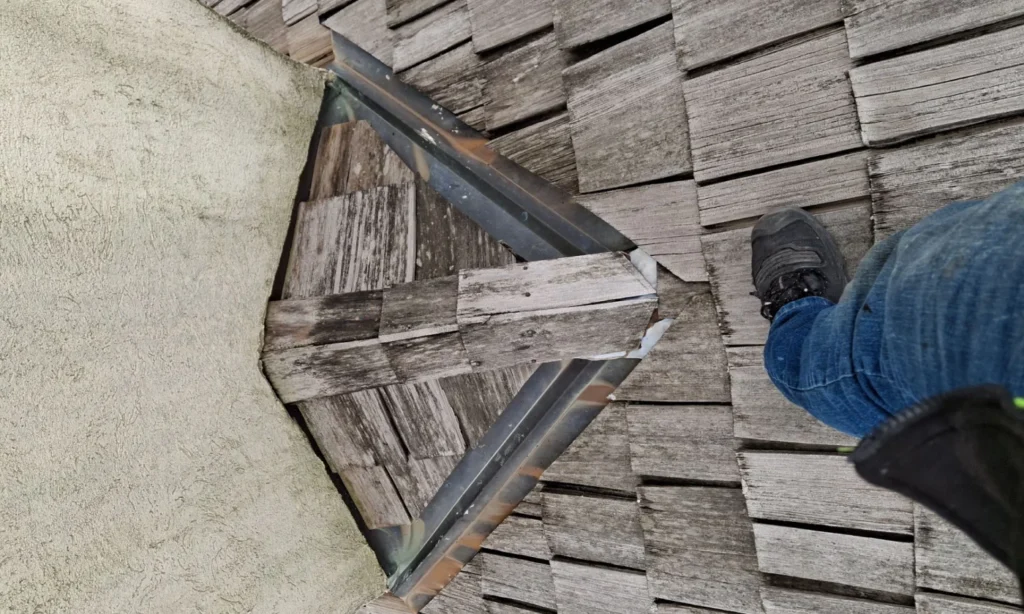
When doing an inspection, you should primarily focus on eliminating the major risk factors, therefore you should always remember to:
- Cleaning Gutters and Downspouts – clogged gutters or downspouts lead to water backups and lead to ice dams, which can easily damage your roof and cause serious leaks on the eaves. Gutter cleaning is by far the most important part of roof maintenance and should be done at least once a year – in late fall;
- Removing Debris from the Roof Surface – clear leaves, branches, and other debris to prevent moisture retention, which can lead to wood rot and the growth of moss or algae. It’s especially important for cedar shake roofs, but the same goes for asphalt or steel roofing;
- Checking the seals and connections – remember that flashings around the chimneys, vents and any other roof penetrations are the most prone to leaking. Therefore, when inspecting the roof you should always concentrate on assessing their condition at most;
- Cutting the tree branches – most of the homeowners can’t even imagine how dangerous it is to keep high trees close to the roof’s perimeter. A falling tree branch may easily bend the gutters, make the shake or tile fall, or even penetrate the roof.
Clean and Remove Debris and Moss
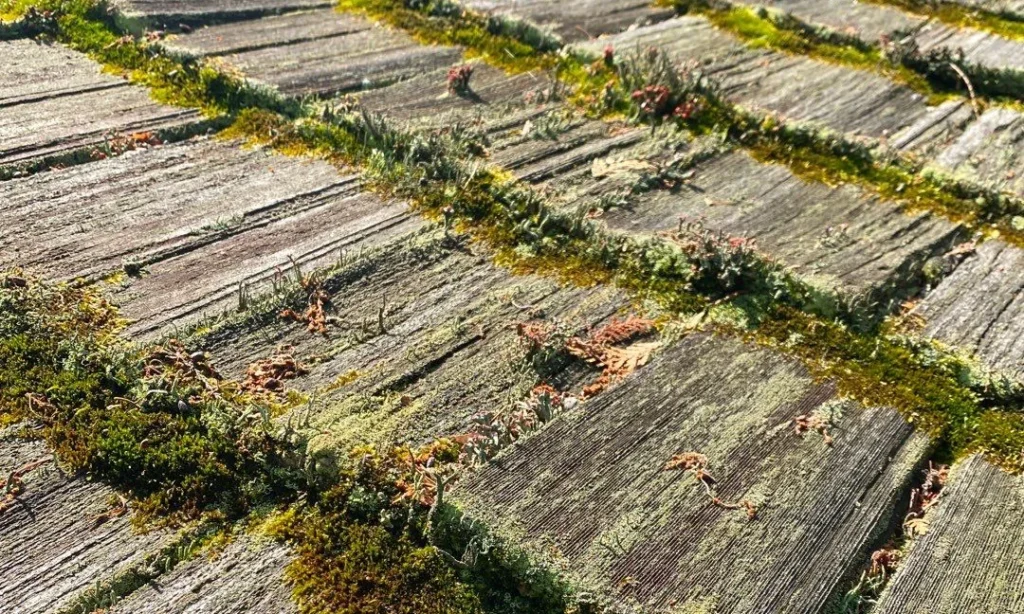
We have already mentioned cleaning, but this time let’s concentrate on removing the debris from the shakes specifically.
Removal of debris and moss is absolutely crucial when it comes to maintaining the integrity and longevity of cedar roofs, mainly because of the water and humidity kept in piles of leaves or tree needles lying on the shakes. When they accumulate, moss and debris increase the risk of wood rotting quickly, and even after cleaning and drying, the affected cedar wood won’t fully recover. This is the reason why you should act quickly and not to wait for better weather or another inspection.
How to Clean a Cedar Roof From Moss and Debris?
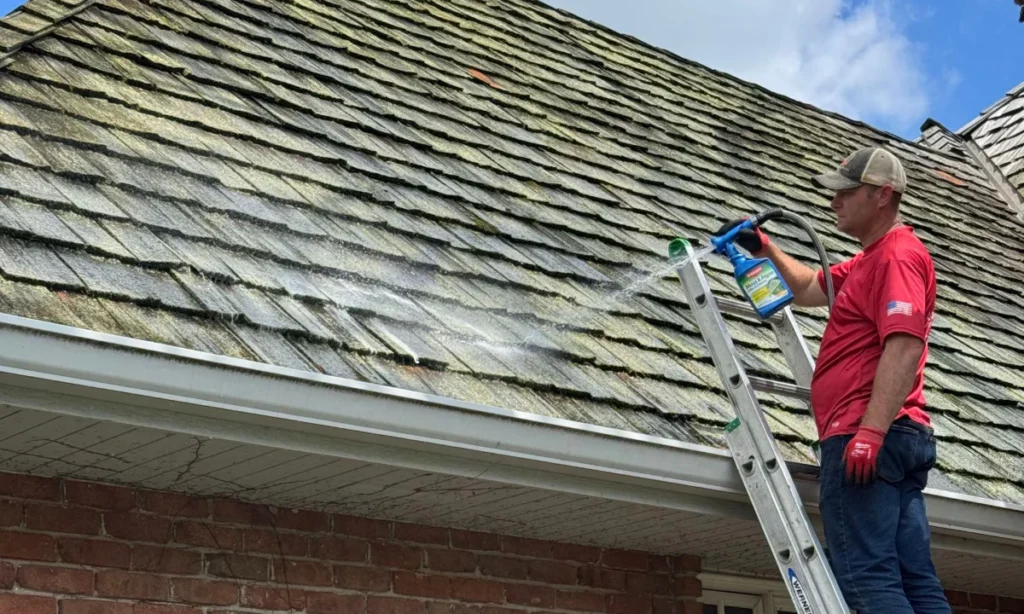
First of all, you should never use chemicals or tools that could damage the shakes, as they probably will do that. Always opt for gentle, non-abrasive cleaners designed specifically for cedar wood and avoid acids or bases. Usually, oxalic acid and mild detergent will be everything you need to clean and restore the shakes.
Keep in mind that a hard-bristle brush or a high-preassure washer may damage the shakes. After a few years of weathering, your cedar shingles are most likely covered with a layer of dust, pollen and other pollutants. While this natural coating doesn’t look appealing, it preserves the wood and protects the inner structure of shakes from degradation. Removing it is a fast way to bring your roof a charming bronze color, but at the same time, it may shorten its lifespan dramatically. Therefore, you should never scrape the shakes – instead, use a soft brush to remove the debris from the roof’s surface.
How Often Should You Clean a Cedar Roof?
Contrary to popular belief, often doesn’t mean better in this case. You can assume, that if you live in a highly polluted area or close a high number of of trees, you should clean your roof every 3-5 years. If your house is exposed to the sun, located far from plants and busy roads, there’s nothing wrong with brushing shingles every 5 or even 10 years.
What Is The Best Time to Clean a Cedar Roof?
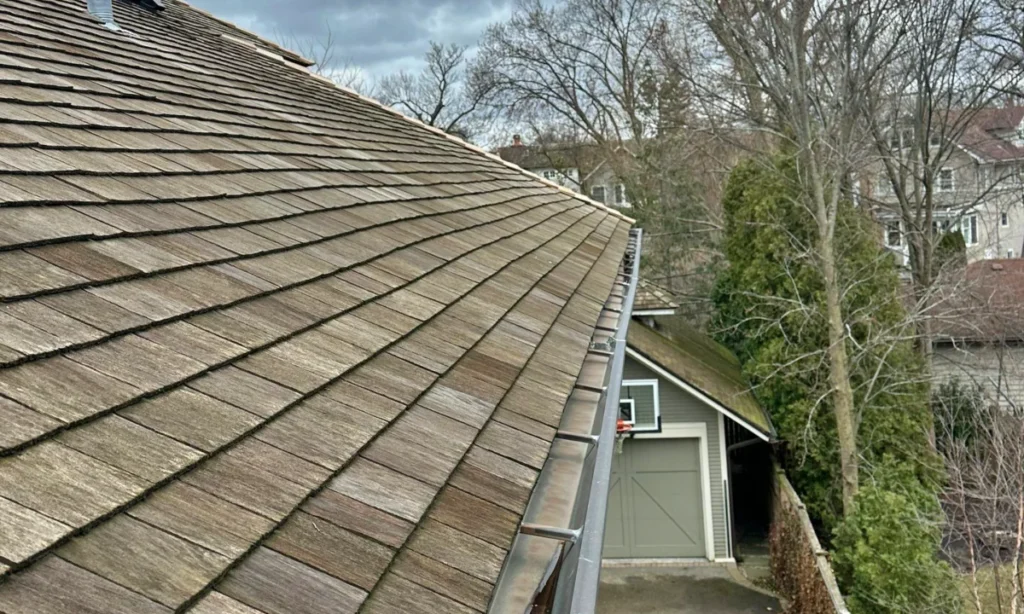
Based on our experience we admit, that the best time in the year to clean the roof is late summer or early fall – a few weeks before the weather gets rainy for good. It’s advisable to do cleaning and color restoration at least 6 weeks before the rain arrives, since cedar wood needs some time to recreate the damaged protective patina.
What Are The Consequences of Neglecting Cedar Shingle Roof Cleaning?
Failing to clean your cedar roof can lead to several issues. First, structural damage may occur – accumulated debris and moss can cause moisture retention, leading to wood rot and compromising the roof’s structural integrity. At the same time, any repair becomes much more expensive. Addressing minor issues promptly is more cost-effective than dealing with extensive damage resulting from neglect. Last, but not least, your home’s curb appeal also loses on neglected care and maintenance.
Perform Repairs Immediately
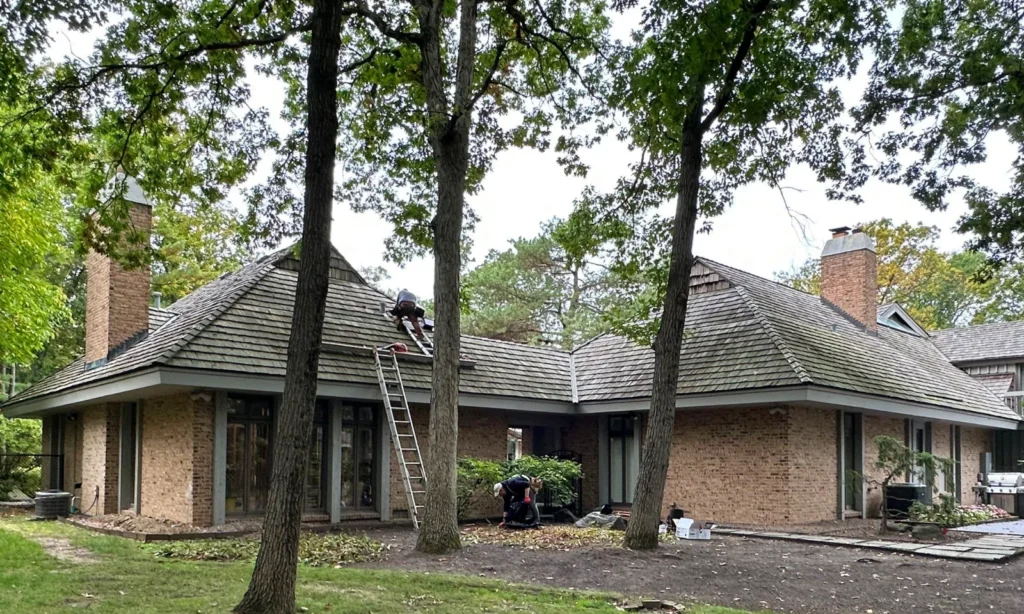
Promptly addressing any damage to your cedar roof is crucial to maintain its integrity and prevent further complications. The faster you find the leak and fix it, the cheaper and easier the repair will be, especially when you take into account that in case of extensive leaks, plywood and roof trusses may also require replacement which increases the repair cost significantly.
Consequences of Delayed Cedar Roof Repairs
Neglecting timely repairs can lead to:
- Structural Damage – water infiltration from leaks can weaken the roof’s structural components (roof trusses, sheathing, even attic flooring), potentially leading to more extensive and costly repairs.
- Increased Repair Costs – delaying repairs often results in the need for more extensive work, as minor issues can escalate into major problems over time. Sometimes it takes only a few weeks for a small leak to turn into a major structural damage.
Risks of Leaving Damaged Cedar Shingles Unattended
Leaving damaged cedar shingles unrepaired can lead to:
- Moisture Damage: Damaged shingles allow water to penetrate, leading to wood rot and compromising the roof’s structural integrity.
- Moss and Algae Growth: Moisture retention can foster the growth of moss and algae, which can further damage the roof and impact curb appeal.
Maintain Cedar Roof Components
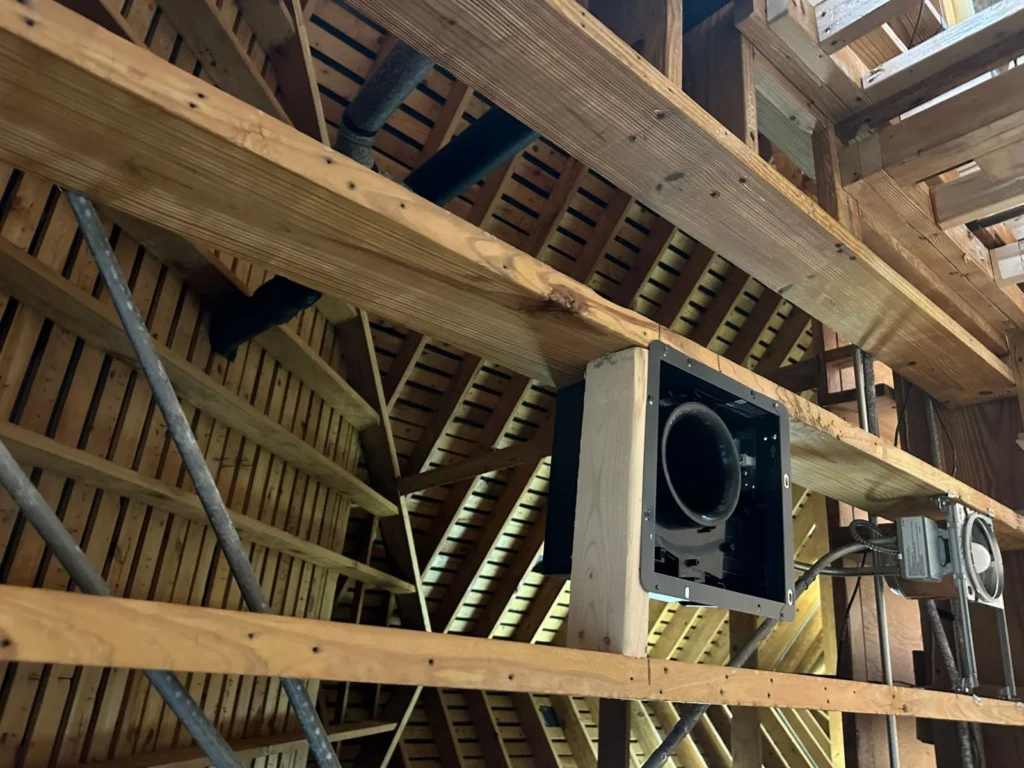
Maintaining key roof components is critical for long-term performance. Focusing on key areas such as gutters, overhanging branches, and debris removal can significantly impact the roof’s durability.
Gutter Maintenance
Inspect and clean your gutters regularly to prevent water buildup, which can lead to wood rot and other structural issues. Make sure gutters are clear of debris and properly aligned to ensure proper drainage. It’s advisable to clean gutters at least once a year, preferably in the fall to handle leaf accumulation.
Trimming Overhanging Branches
Overhanging branches can cause several issues to your cedar roof:
- Physical Damage: Branches may scrape against the roof in high winds, damages shingles.
- Moisture Retention: Shade from branches can prevent the roof from drying properly after rain, encouraging moss and algae growth.
Pruning branches that hang over your roof helps mitigate these risks, allowing the roof to dry faster and reducing the chance of harmful mold growth.
Debris Removal
Accumulated debris such as leaves, twigs, and needles can trap moisture against the roof’s surface, accelerating deterioration. Regularly removing debris, especially from valleys and corners where buildup is common, is essential. This practice helps prevent moisture retention and the growth of moss, algae, and lichens.
Ensure Proper Ventilation
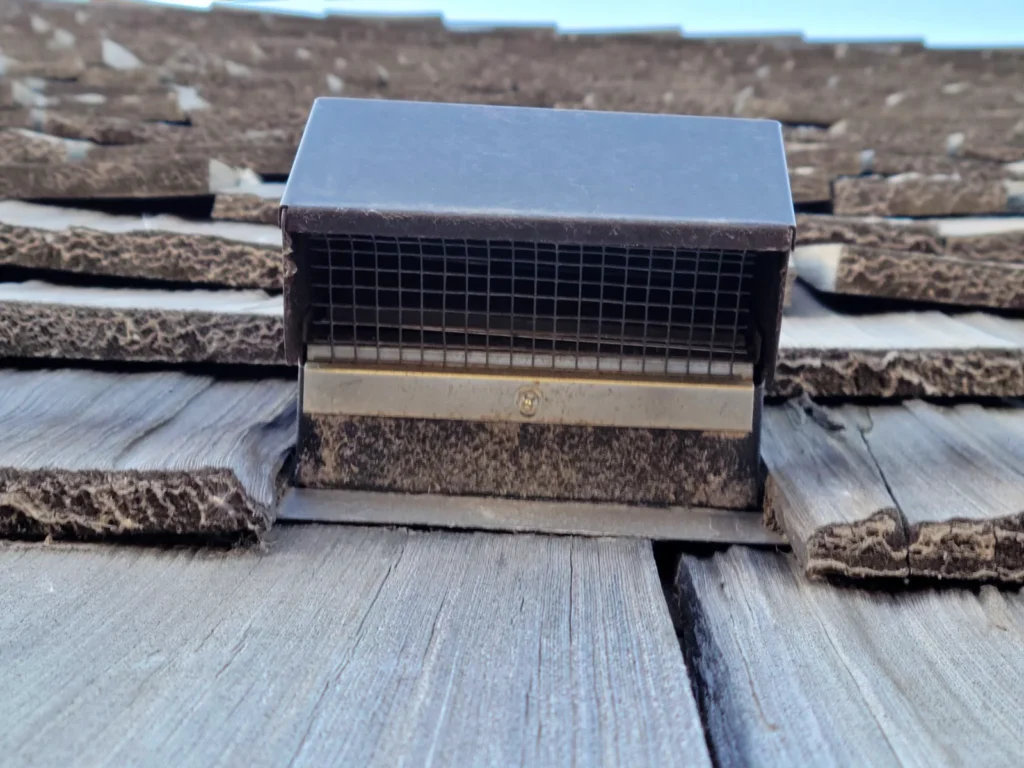
Proper ventilation of your cedar roof is critical for longevity and moisture control. It removes excess moisture from beneath the roofing, preventing mold growth and structural damage.
Recommendations for Cedar Roof Ventilation:
- Ventilated Air Space: Ensure continuous airflow space between the roof decking and the roofing material. This space allows air to circulate, carrying moisture away and preventing condensation buildup. Proper ventilation helps maintain the roof’s structural integrity and prevents moisture-related issues.
- Ridge and Eave Vents: Install vents at both the ridge and eaves of the roof to promote continuous airflow. This setup facilitates the escape of warm, moist air and the intake of cooler, dry air, reducing the risk of moisture accumulation and temperature-related stress on the roof structure.
- Avoid Obstructions: Ensure that insulation and other materials do not block the ventilation pathways. Insulation should never block airflow in the ventilated space, as this could lead to moisture buildup and potential damage.
Apply Protective Coatings
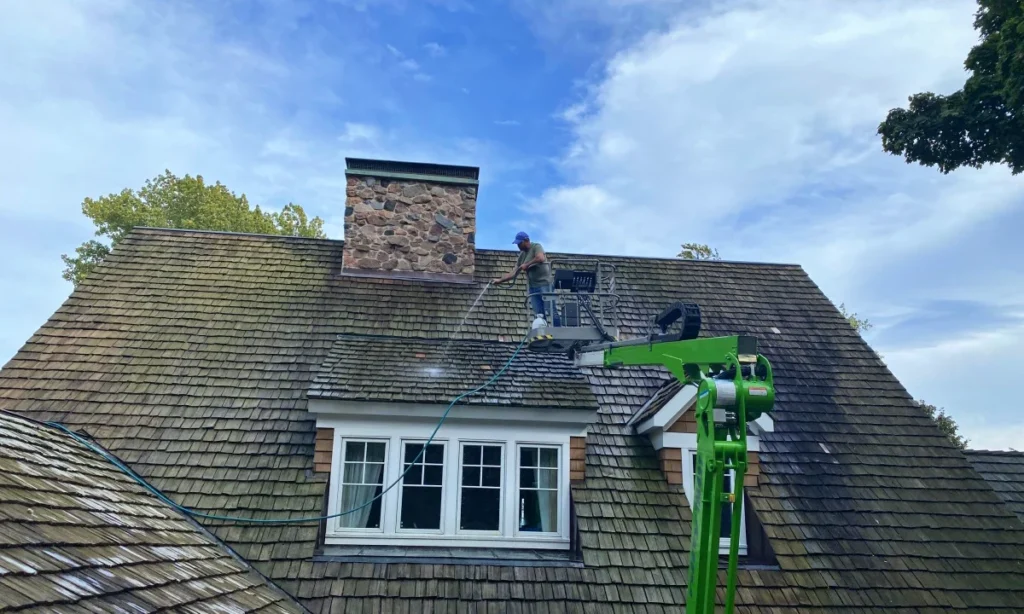
Applying protective coatings to your cedar roof helps preserve appearance and extend lifespan. They protect the wood from environmental elements such as UV rays, moisture, and mold, ensuring your roof remains both attractive and durable.
Benefits of Protective Coatings
- UV Protection: Coatings with UV blockers prevent fading and discoloration caused by sun exposure. For instance, Cedar Seal offers protection against UV damage, preserving the wood’s natural color.
- Moisture Resistance: Water-repellent treatments protect the roof from moisture infiltration, which can lead to mold growth and wood rot. Products like Seal-Once NANO+POLY Premium Wood Sealer provide a durable, breathable finish that guards against water damage.
- Mold and Mildew Prevention: Certain coatings inhibit the growth of mold and mildew, maintaining the roof’s integrity and appearance. Wash Safe Cedar Seal, for example, prevents mold growth while allowing the wood to age gracefully.
Recommended Protective Coatings
- Seal-Once NANO+POLY Premium Wood Sealer: This sealer combines nanotechnology with polyurethane to offer comprehensive protection against UV rays, water damage, and wear. It penetrates deeply into the wood, ensuring long-lasting defense.
- Wash Safe Cedar Seal: A clear, breathable sealer that protects cedar roofs from water damage and mold growth without altering the wood’s natural appearance. It provides up to 10 years of waterproofing protection.
- Sansin Roof-Tec: Designed specifically for cedar roofs, Roof-Tec enhances the wood’s natural beauty while offering superior protection against weathering and rot. It’s available in tinted and clear options to suit different aesthetic preferences.
Application Tips
- Preparation: Before applying any coating, thoroughly clean the roof to remove debris and existing mold. Ensure the surface is dry and free from contaminants to allow proper adhesion.
- When to apply: Apply coatings during mild weather conditions, avoiding extreme temperatures or high humidity, which can affect the curing process.
- Maintenance: Reapply protective coatings every 3 to 5 years, or as recommended by the manufacturer, to maintain optimal protection and appearance.
Maintain Gutter Systems
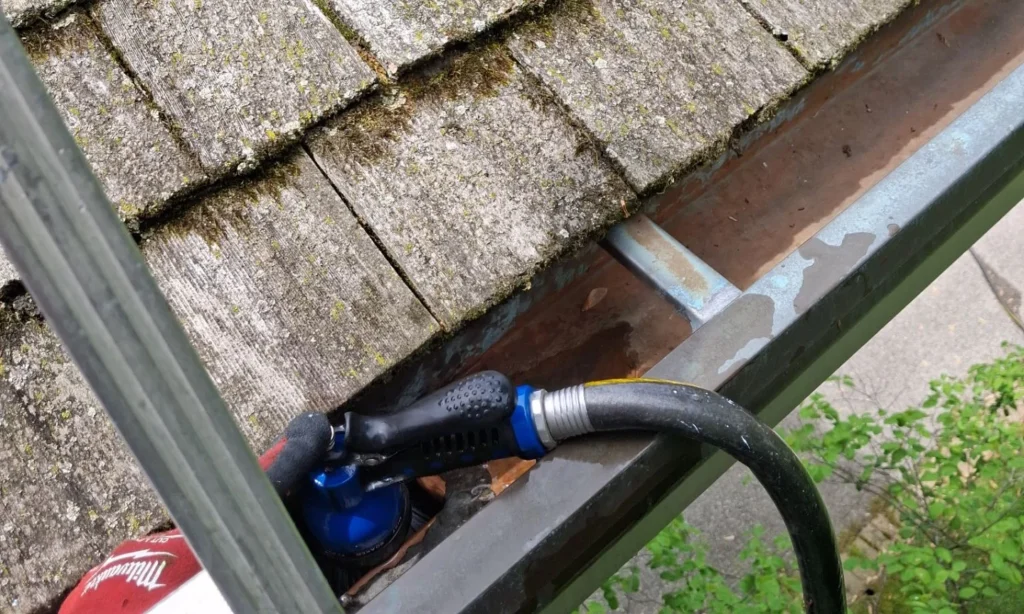
Regular maintenance of your gutter system is essential to preserve the integrity and longevity of your cedar roof. Properly maintained gutters direct water away from your roof and foundation, preventing potential damage.
Cleaning Gutters
Experts recommend cleaning your gutters at least twice a year, typically in the spring and fall. However, in areas abundant with trees or after heavy storms, more frequent cleaning may be necessary to prevent clogs and water damage.
Inspecting and Repairing Gutters
Regularly inspect your gutters for signs of damage, such as leaks, rust, or misalignment. Fixing minor issues can prevent more significant problems, including water overflow and potential roof damage.
Choosing the Right Gutter System
Selecting gutters that complement your cedar roof really matters. Materials like copper or pre-finished aluminum are durable and improve curb appeal. Styles such as half-round, K-style, or box gutters are popular choices, each offering distinct advantages.
Installing Gutter Guards
Gutter guards can help with preventing debris, including pine needles, from entering your gutters. However, their effectiveness can vary depending on the type of guard and local conditions. It’s essential to research and choose guards suitable for your environment.
Professional Assistance
If you’re uncomfortable with heights or the physical effort involved, consider hiring a professional. They can ensure gutters are properly cleaned, inspected, and maintained, safeguarding your cedar roof and enhancing your home’s longevity.